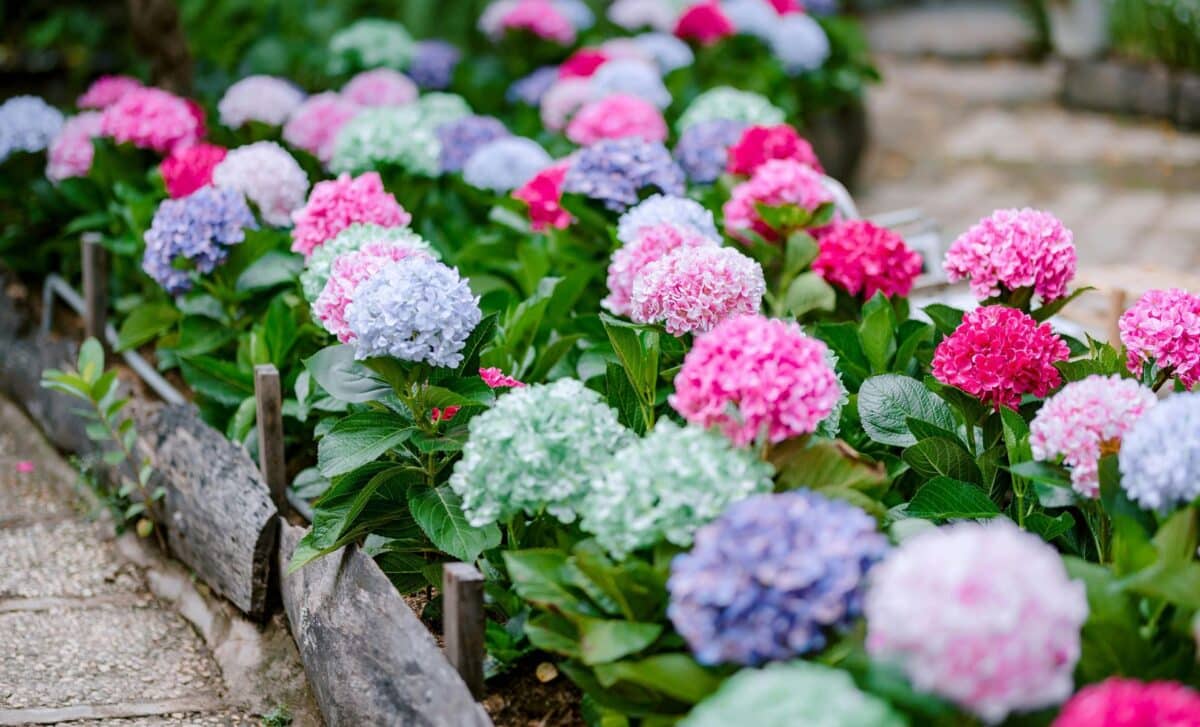
Few garden plants make a bigger impact than hydrangeas. Their large flower heads and dense green foliage can transform a border, patio, or shaded corner almost overnight. But by June, many gardeners start noticing the same issue: leaves drooping during the day, blooms losing their freshness, and plants looking far less vigorous than they did in spring.
While it may seem like a sign that the plant needs more water, the solution is often less about how much you water and more about how well the soil retains moisture. A simple technique used by experienced gardeners can help hydrangeas stay fuller, healthier, and better prepared for summer heat.
June Is Often the First Real Test for Hydrangeas
Hydrangeas thrive in moist soil and moderate temperatures. Early summer can be challenging because warmer days increase water loss through the plant’s large leaves.
Unlike some shrubs that develop deep root systems, many hydrangeas have roots that remain relatively close to the surface. This makes them more vulnerable when the top layer of soil dries out. Even a few hot days can leave plants looking tired and stressed.
The first signs are usually easy to spot. Leaves begin to droop, flower buds develop more slowly, and blooms may start browning around the edges. Although these symptoms can look alarming, they are often the plant’s natural response to heat and water stress rather than a sign of permanent damage.
Many gardeners react by watering more frequently, but that approach doesn’t always solve the underlying problem.
Aphids on Your Tomatoes? This Colorful Flower Could Help Protect Your Plants
Frequent Watering Can Become a Losing Battle
During warm weather, surface watering often provides only short-term relief. The soil may appear moist immediately after watering, yet much of that moisture can evaporate quickly, especially during sunny afternoons.
As a result, gardeners may find themselves watering every day while the plant continues to struggle. The hydrangea receives water, but the soil isn’t holding onto it long enough to provide consistent hydration.
This is particularly common in gardens with sandy soil or in areas experiencing prolonged dry conditions. Instead of helping the plant build resilience, repeated shallow watering can create a cycle where the roots remain dependent on constant moisture near the surface.
The goal should be to keep the root zone cooler and wetter for longer periods. That’s where one simple gardening practice can make a noticeable difference.
Mulch Creates Better Conditions for Summer Growth
Adding a layer of mulch around the base of a hydrangea is one of the most effective ways to protect it from summer stress.
Organic materials such as pine bark, shredded leaves, straw, wood chips, or pine needles form a protective layer over the soil. This cover slows evaporation, shields the ground from direct sunlight, and helps maintain a more stable temperature around the roots.
Gardeners typically apply mulch in late spring or early summer before the hottest weather arrives. After thoroughly watering the soil, a layer about two to three inches thick is spread around the plant. Leaving a small gap around the stems is important to prevent excess moisture from accumulating against the base.
The benefits extend beyond water conservation. As the mulch gradually breaks down, it improves soil structure and adds organic matter that supports healthy root development.
Combined with deep watering once or twice a week during dry periods, mulching can help hydrangeas maintain stronger foliage and larger blooms throughout the season.