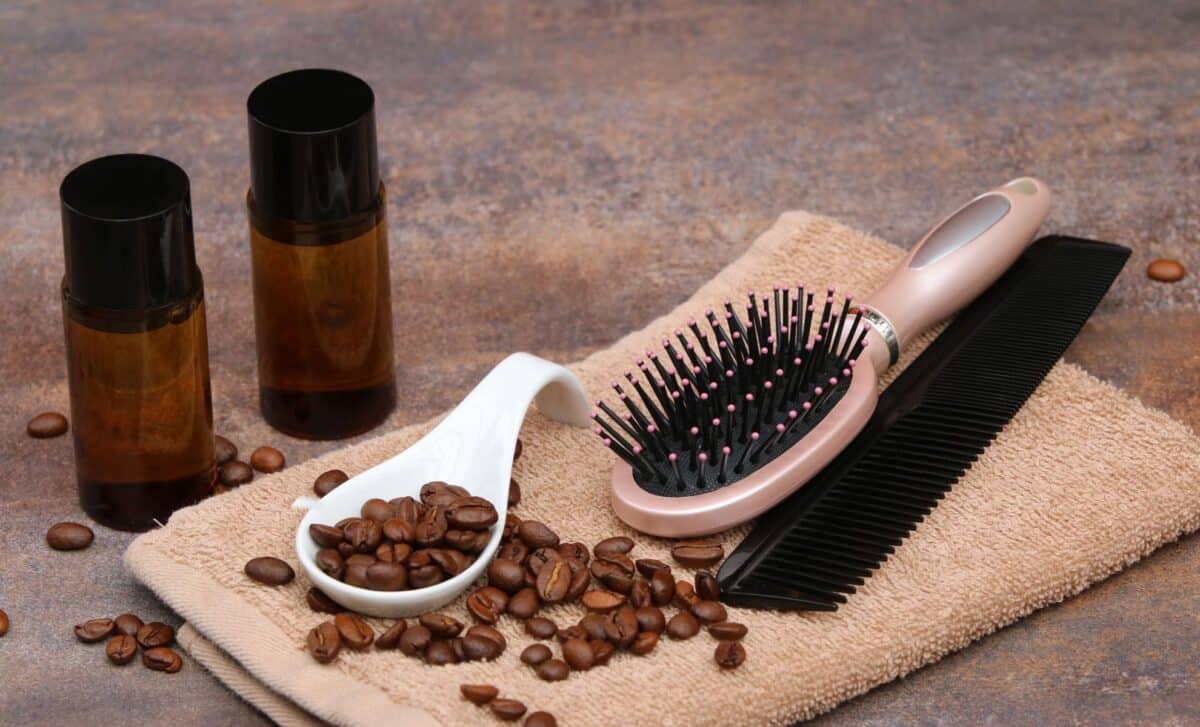
From rosemary oil to rice water, social media never runs out of hair growth trends. Now, it’s caffeine‘s turn to take center stage. It’s showing up in shampoos, serums, scalp treatments, and leave-in sprays, all promising stronger, fuller-looking hair. The idea sounds pretty convincing: if caffeine can wake you up in the morning, could it also give your hair a boost? It’s an appealing thought, but the answer isn’t quite as simple.
While some experts believe caffeine can support healthier hair growth, others point out that the science is still catching up with the hype. So, is it worth adding a caffeine product to your routine, or should you save your money? Here’s what the research actually says.
Your Morning Coffee… For Your Scalp?
Caffeine doesn’t work on your scalp the same way it works on your brain, but researchers believe it may still have some interesting benefits. When applied directly to the scalp, caffeine may help improve blood circulation around the hair follicles. Better circulation means more oxygen and nutrients can reach the roots, creating healthier conditions for hair to grow.
Scientists have also found that caffeine may help hair stay in its growing phase, known as the anagen phase, for a little longer. The longer a hair remains in this stage, the more time it has to grow before it naturally falls out.
Another reason caffeine has attracted so much attention is its possible effect on DHT, the hormone linked to androgenetic alopecia, the most common type of hair loss. Some laboratory studies suggest caffeine may reduce DHT’s impact on hair follicles, although these results have mostly been observed in controlled lab settings rather than in large clinical trials.
Worth Trying, But Don’t Expect Miracles
One study even compared a topical caffeine solution with 5% minoxidil, one of the best-known treatments for hair loss. The results suggested that caffeine may support the hair growth cycle in a similar way under certain conditions. Still, dermatologists agree that minoxidil and finasteride have much stronger scientific evidence behind them and remain the gold standard for treating hair loss.
That doesn’t mean caffeine products are useless. If you’re looking to strengthen your hair care routine, they can be a nice addition. Experts recommend choosing products where caffeine appears near the top of the ingredient list, since this usually means there’s enough of it to potentially make a difference. Leave-in serums may also be more effective than shampoos because they stay on the scalp longer.
Like most hair care products, consistency is key. It usually takes anywhere from two to six months of regular use before you might notice any changes. While caffeine probably won’t perform miracles on its own, it could give your hair a little extra support, especially when combined with a healthy lifestyle and the right treatments if needed. If you’re experiencing significant or ongoing hair loss, it’s always best to speak with a dermatologist to understand what’s causing it.