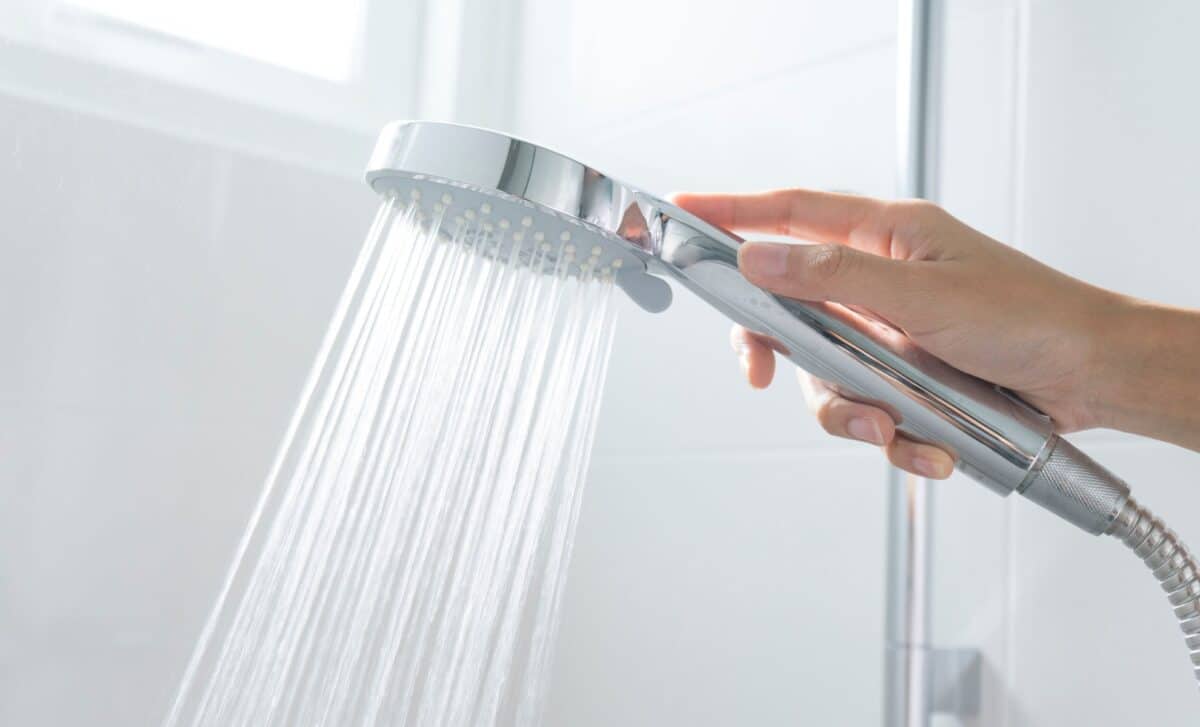
Most of us don’t think much about our shower head. It’s just there, doing its job every day. But according to several studies, the inside of a shower head can actually contain billions of bacteria.
Before you start looking at your bathroom differently, there’s some good news: bacteria are everywhere, and most of them aren’t harmful. Still, the warm, damp environment inside a shower head makes it a perfect place for microorganisms to settle in and multiply. Scientists have been studying this phenomenon for years, and their findings reveal that a simple household fixture can host a surprisingly active microscopic world.
Why Do Bacteria Love Shower Heads So Much?
The answer is pretty simple: moisture. The inside of a shower head stays wet almost all the time, and minerals from the water gradually build up on its surfaces. These conditions create the perfect environment for bacteria to grow.
Over time, these microorganisms form what’s known as a biofilm; a thin layer that sticks to the inside of the shower head. Think of it as a tiny bacterial community living on the walls of your plumbing system.
Researchers have found these biofilms in homes all over the world. While that may sound alarming, it’s worth remembering that most of the bacteria found there are harmless. They naturally exist in water systems and are part of the environment around us.
For healthy people, there’s generally little reason to worry. The main concern is for individuals with weakened immune systems or certain respiratory conditions, who may be more sensitive to exposure.
This Toilet Paper Trick Is Going Viral for Keeping Mosquitoes Away This Summer
The Surprising Thing That Happens Every Time You Shower
Every time water sprays through a shower head, it creates a cloud of tiny droplets known as an aerosol. These microscopic droplets are released into the air and can remain suspended throughout the bathroom for several minutes.
As they spread beyond the shower itself, they become easy to inhale during your routine. While most people never notice this process, it happens every time the water is turned on. Researchers have taken an interest in these airborne droplets because they can carry microorganisms that may be present inside the shower head, making them an important part of how bacteria circulate within household water systems.
A Quick Cleaning Habit Can Make a Big Difference
The easiest way to reduce bacterial buildup is regular cleaning. Fortunately, it doesn’t require expensive products or a complicated routine. White vinegar is often recommended because it helps dissolve limescale, one of the main reasons biofilms develop in the first place.
Soaking a shower head in vinegar every few months can help keep it cleaner and improve water flow at the same time. And if you live in an area with hard water, you may need to clean it more often. And if your shower head is old or heavily clogged, replacing it could be the simplest solution.