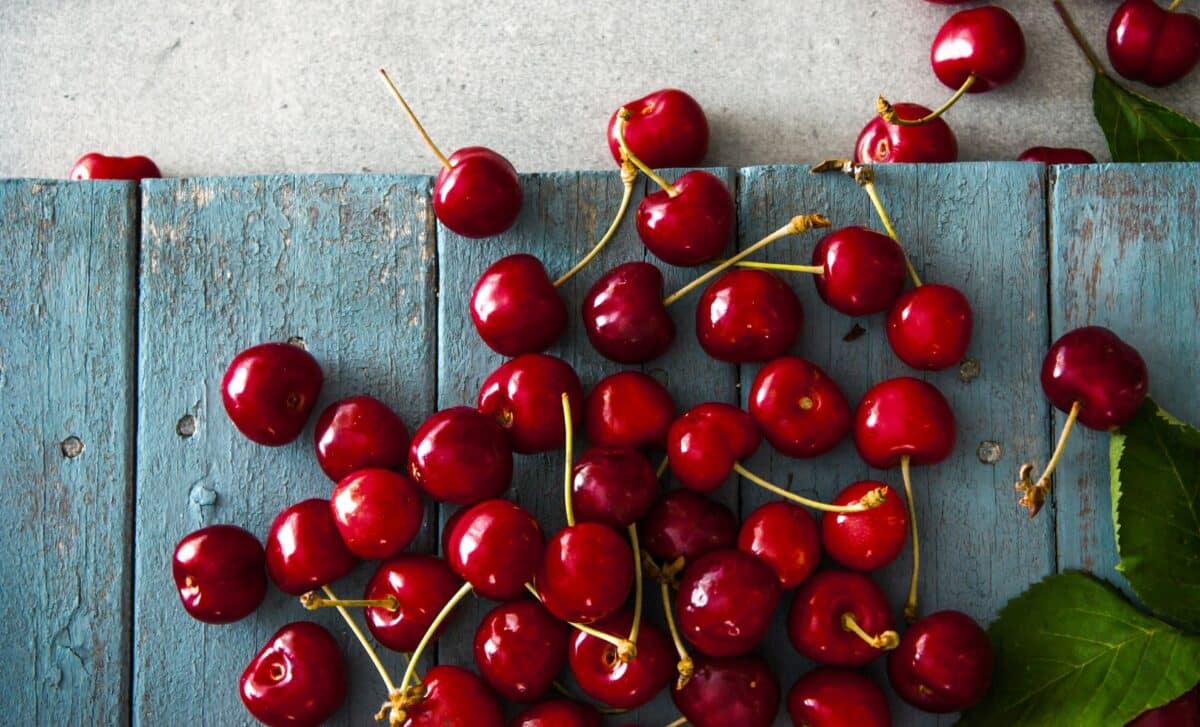
Cherries always look like a safe bet. Shiny, deep red, perfectly round… they basically sell themselves. But anyone who has bought a box only to end up with bland or soft fruit knows the truth: appearance doesn’t always match flavour.
The good news is that picking the right cherries isn’t complicated. A few quick checks are enough to separate the really good ones from the disappointing ones, whether you’re at a supermarket, a market stall, or a pick-your-own orchard.
The Key Things To Look For Before You Buy
Start with the stems. This is one of the easiest signals of freshness. Good cherries usually have green, flexible stems that are still firmly attached. If the stems are dry, brown, or brittle, the fruit has likely been sitting around longer and won’t be at its best anymore.
Then look at the texture. A good cherry should feel firm when gently squeezed. Not rock hard, but definitely not soft or squishy. Any slight collapse under pressure usually means the fruit is starting to degrade inside. The skin should look smooth and tight, without wrinkles or soft spots.
Colour helps too, but it depends on the variety. For red cherries, the deeper and darker tones often mean better flavour. Bright red can look appealing but sometimes signals a less developed taste. For yellow cherries like Rainier, a soft golden colour with a slight pink blush is usually a strong sign of ripeness and sweetness.
Size can also play a role. Bigger cherries often mean more flesh and a juicier bite. One slightly confusing detail: sizing numbers work backwards, so a lower number actually means a larger cherry.
Every Day or Just 3 Times a Week? How Often You Should Really Be Washing Your Hair
On The Tree, Things Get A Bit Different
If you ever pick cherries straight from a tree, the rules shift slightly. The most visually perfect fruits aren’t always the best ones. More sun exposure can change how cherries look, making them darker or slightly weathered, but that’s usually a sign of better sweetness.
How the fruit comes off the stem is another key clue. A ripe cherry should detach easily with its stalk. If you have to pull too hard, it probably isn’t ready yet. Forcing it can also damage the tree and reduce future yields, which growers always try to avoid.
Cherries also tend to grow in small clusters. When they’re ripe, they often come away in pairs or threes quite naturally. The trick is to be gentle and take them without bruising the fruit, since even small impacts can shorten their shelf life once they’re picked.
Keeping Them Fresh (And Actually Enjoying Them Later)
Once you get your cherries home, what you do next matters just as much as how you picked them. One common mistake is washing them straight away. Moisture speeds up spoilage, so it’s better to keep them dry and only rinse them right before eating.
For storage, a wide container works best. Spreading them out with a bit of paper towel underneath helps absorb excess moisture and prevents them from getting crushed. Stored this way in the fridge, they’ll usually stay good for several days.
If you end up with a large batch, freezing is a solid option. It’s better to pit them first, then lay them out on a tray so they freeze individually before transferring them into a bag or container. This way, they don’t clump together and stay easy to use later.
Frozen cherries are especially good for smoothies, baked desserts, or anything cooked where texture matters less. They keep their flavour surprisingly well, even if they lose a bit of their fresh bite.