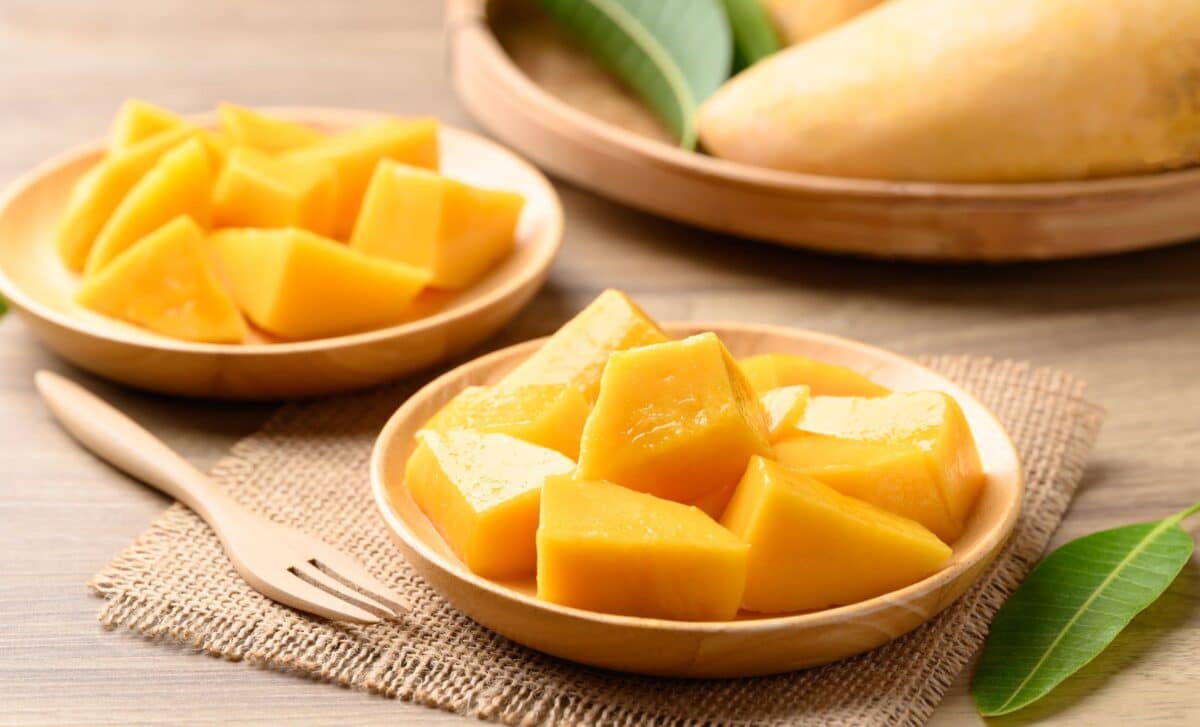
Mangoes are everywhere in markets and supermarkets, looking bright, juicy, and ready to eat, but most people don’t realize that their taste, texture, and aroma depend a lot on how they’re stored after harvest. If it’s too warm, the fruit ripens way too fast, the flesh gets soft, and the flavor can turn bland or uneven. If it’s too cold, the mango can actually get damaged in ways you don’t even see.
Researchers have found something surprising: there’s a sweet spot in temperature that keeps mangoes firm, juicy, and flavorful for longer, basically giving them a second life from farm to table.
This little trick could completely change the way mangoes travel from farms to kitchens. Fruits can arrive looking more consistent, with vibrant colors and firm flesh, which makes eating them way more enjoyable. At the same time, it helps reduce waste because fewer mangoes get overripe or squishy before they reach your kitchen. Farmers, distributors, and shoppers all win, everyone gets fruit that’s ready to enjoy exactly when it should be.
Why 12 °C Might Just Be Nature’s Secret Weapon
At room temperature, around 30 °C (86 °F), mangoes ripen incredibly fast. Their flesh softens almost overnight, the color changes quickly, and the flavor can suffer, leaving many mangoes arriving at stores overripe or mushy. But at 12 °C, everything slows down. The color develops gradually, the flesh stays firm, and the taste keeps that perfect balance of sweetness and tropical aroma.
According to Tropical Plants, this extra time is essential for transporting, storing, and selling mangoes without losing their quality. For farmers and distributors, it’s a huge plus: fewer losses, less waste, and happier customers who get fruit that’s consistent, reliable, and ready to eat at just the right moment.
Sick of Watching Your Balcony Plants Burn Up Every Summer? These Heat-Loving Varieties Actually Thrive in Full Sun
How Mangoes Stay Fresh
The secret isn’t complicated: at 12 °C, mangoes don’t “tire out” as quickly. Their texture remains crisp, their flesh stays sweet, and the color remains vibrant. Mangoes traveling long distances can arrive intact at stores, ready to eat. In short, this temperature helps the fruit resist transport, handling, and time, while keeping the enjoyment intact.
For tropical fruit lovers, it completely changes the experience: a mango can be delicious even after a few days of travel. The result is simple to understand: mangoes that are firm, sweet, and enjoyable, ready whenever you are.