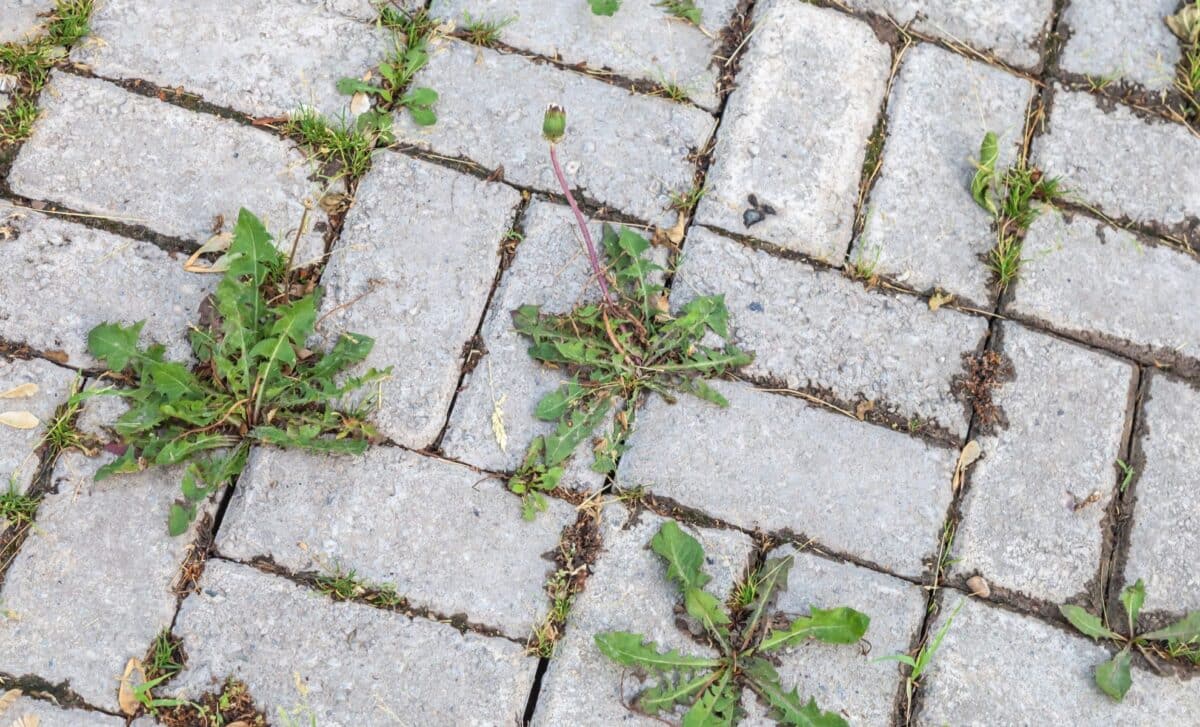
Weeds have a way of showing up exactly where they are least wanted. Between patio tiles, along garden walls, or in small cracks outside, they can make even tidy outdoor spaces look messy in no time. And once they appear, getting rid of them is not always as quick as expected.
That’s why simple home remedies continue to attract attention. One popular option is the hot water and salt method, a simple and low-cost alternative to stronger weed killers. But while this trick is widely known, it doesn’t work the same way everywhere and it’s not always the right choice for every part of the garden.
Why Weeds Keep Coming Back So Fast
Weeds don’t need much to grow. A little bit of soil, some moisture, and a small gap between tiles can be enough. Seeds arrive naturally through wind, rain, or everyday movement around the garden. Once they settle into cracks or joints, they can start growing surprisingly fast. That’s why patio edges, pathways, and outdoor corners often seem impossible to keep completely clear.
The longer weeds stay in place, the harder they can become to remove because roots start developing deeper into the ground. For many people, the goal is simply to stop the problem early before it spreads.
Nobody Talks About These Fruit Trees, Yet They Produce Dozens of Kilos of Fruit Without Regular Watering
Why People Still Use Hot Water And Salt
People continue to use this method because it’s simple, inexpensive, and doesn’t require special products. The idea is straightforward: hot water helps weaken the parts of the weed exposed above the surface, while salt is commonly used to help dry the plant out.
For that reason, the mixture is usually applied directly onto unwanted growth, especially when weeds are still young and easier to manage. But using more salt doesn’t automatically make the treatment more effective. Since salt can remain in the ground, it may affect nearby plants and change soil conditions over time. That’s why this method is generally kept away from flower beds, vegetable gardens, and planted areas where healthy growth needs to be preserved.
Keeping Weeds Away Takes More Than One Treatment
Even if weeds disappear after treatment, that doesn’t necessarily mean the problem is solved for good. In many cases, new seeds can settle quickly and start growing again if the conditions stay the same. That’s why regular maintenance usually makes a bigger difference over time than a one-time fix. Clearing away dirt, dead leaves, and small debris between tiles can help reduce the moisture and organic matter weeds need to develop.
In garden beds and planted spaces, adding mulch is another common way to slow regrowth by limiting light and making it harder for seeds to take hold. The hot water and salt method remains popular because it’s easy and inexpensive, but results often depend less on the mixture itself and more on where and how it’s used.