Wooden furniture has a way of transforming a space. Whether it’s a family dining table, a vintage cabinet, or a simple bookshelf, wood brings warmth and character that synthetic materials rarely match. But over time, even the most beautiful pieces can begin to lose their glow. Dust settles into the grain, sunlight fades the finish, and everyday use leaves surfaces looking tired.
Many people instinctively turn to commercial cleaning products to restore shine. Yet these formulas often contain silicones and synthetic ingredients that can leave residue behind or gradually alter the texture of the wood. That is why natural maintenance methods continue to attract attention. One of the simplest solutions combines two ingredients already found in many kitchens.
Why Olive Oil and White Vinegar Work So Well Together
At first glance, olive oil and white vinegar may seem like an unusual combination for furniture care. One belongs in cooking, the other in household cleaning. Together, however, they create a surprisingly effective treatment for maintaining wooden surfaces.
White vinegar contains acetic acid, which helps dissolve greasy marks, lift fingerprints, and remove light layers of built-up dust. Unlike some stronger chemical cleaners, it works gently when diluted correctly and leaves surfaces looking cleaner rather than coated. Olive oil plays a completely different role. Instead of cleaning, it nourishes the wood. Because wood is porous and naturally reacts to humidity and environmental conditions, it can sometimes appear dry or faded.
Putting Aluminum Foil In Kitchen Drawers: What It’s For And When To Do It
How to Prepare and Apply the Mixture Correctly
Preparing this homemade treatment is simple and only takes a minute. Mix one part white vinegar with two parts olive oil in a small container or spray bottle. Since oil and vinegar naturally separate, shake the mixture thoroughly before every use to create a temporary emulsion.
If the smell of vinegar feels too strong, adding a few drops of essential oil, such as lemon or eucalyptus, can make the experience more pleasant. Before treating an entire piece of furniture, test the mixture on a hidden area. Wood species and finishes react differently, and this small precaution can prevent unwanted surprises.
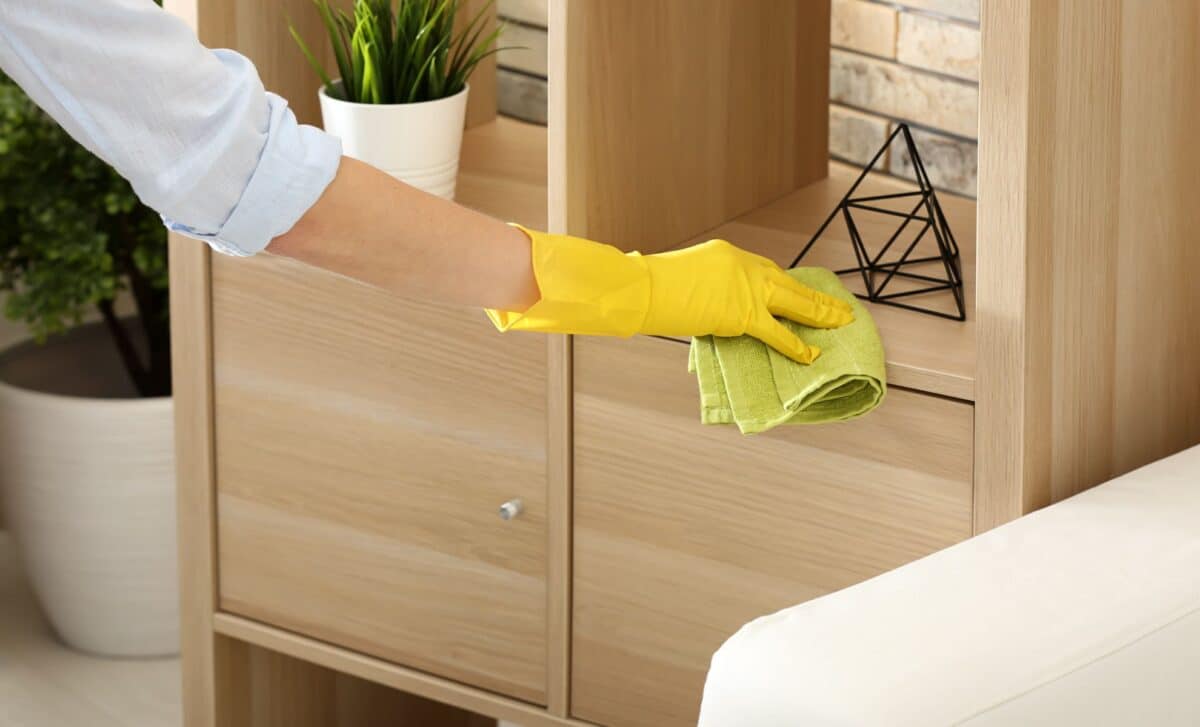
To apply, pour a small amount onto a microfiber cloth rather than directly onto the furniture. Rub gently using circular motions while following the natural direction of the wood grain. This technique helps distribute the product evenly and avoids streaks.
After letting the surface sit briefly, use a dry cloth to remove excess oil. Skipping this final step may leave the wood sticky and attract more dust later.
The Precautions That Matter for Long-Term Results
Although this natural method can refresh furniture beautifully, it should not be treated as a miracle restoration technique.The mixture works best for routine maintenance and for wood that simply looks dull from daily use. Deep scratches, water damage, or worn finishes usually require more advanced restoration methods.
It is also important to choose the right surfaces. Untreated raw wood and very pale woods, especially species such as maple, may absorb oil unevenly or develop slight discoloration over time. For those cases, a lighter neutral oil, such as grapeseed oil, may be a safer alternative.
The key is moderation. Wooden furniture does not need frequent oil treatments. Regular dusting combined with occasional nourishing care is usually enough to maintain its appearance.