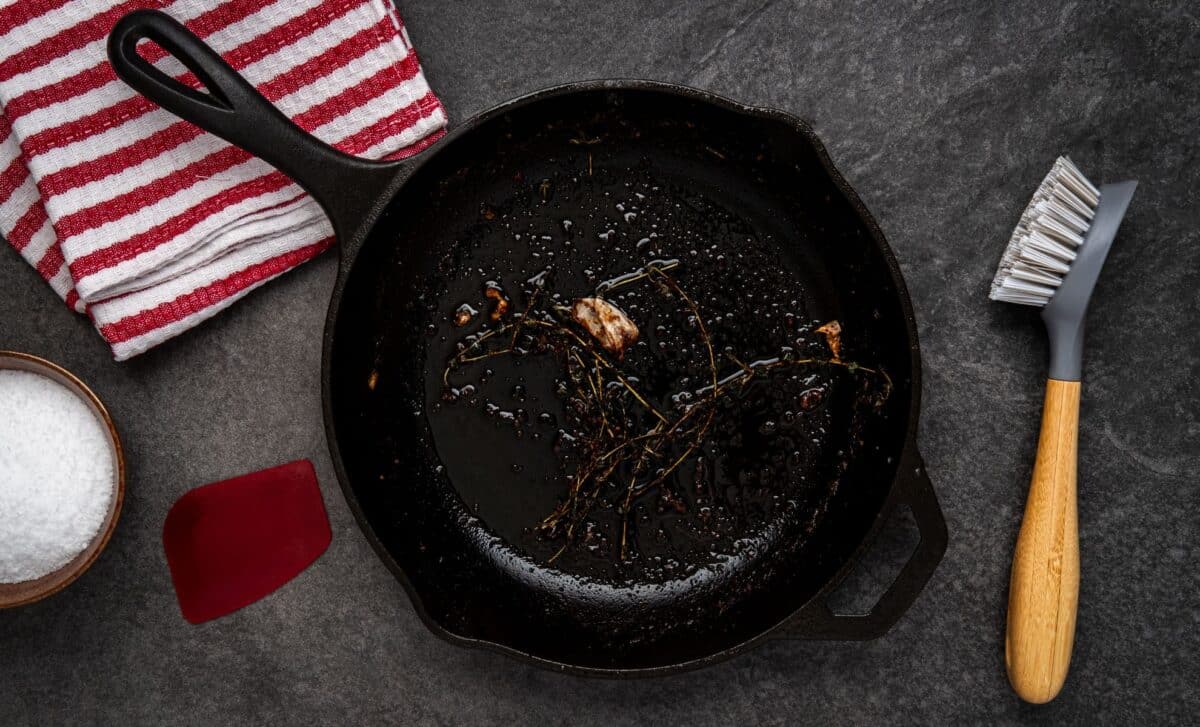
A cast iron skillet is one of those kitchen essentials that never really goes out of style. When properly cared for, it can last for decades and even be passed down from one generation to the next. Yet many people still make the same mistake after every meal: washing it with dish soap just like any other pan.
While doing so once in a while is unlikely to cause any real damage, using strong degreasers too often can gradually weaken the seasoning that gives cast iron its unique qualities. The good news is that a few simple habits are all it takes to keep your skillet performing at its best for years.
Why Some Cast Iron Skillets Last A Lifetime
What makes a cast iron skillet so effective is its seasoning. Over time, heated cooking oil bonds to the surface of the metal, creating a thin protective layer. With every use, this coating becomes stronger, making the pan naturally more non-stick while helping to protect it from rust.
Contrary to popular belief, using a small amount of mild dish soap from time to time will not usually ruin a well-seasoned skillet. However, repeated washing with powerful degreasers or putting it in the dishwasher can gradually wear away this protective layer.
As a result, food may begin to stick more easily, the skillet can lose its deep black finish, and rust becomes more likely. If the surface starts to look dull, dry, or rough, it’s often a sign that the seasoning needs a little attention.
Your Air Conditioner Is Dumping Free Water, Here’s Why You Should Stop Wasting It
A Few Simple Habits Make All The Difference
Cleaning a cast iron skillet is easier than many people think. After cooking, rinse it with hot water while it is still slightly warm. A soft brush, sponge, or a scraper designed for cast iron is usually enough to remove any food residue.
The most important step is drying it thoroughly. Cast iron and moisture are not a good match. Many home cooks place the skillet over low heat for a minute or two to make sure every last drop of water has evaporated.
Once the skillet is completely dry, apply a very thin layer of oil using a paper towel. The goal is not to leave the surface greasy but simply to protect the metal and maintain the seasoning. Refined canola oil, grapeseed oil, and refined sunflower oil are all popular choices because of their relatively high smoke points.
Even An Old Skillet Can Be Restored
If your skillet starts sticking or the seasoning has worn away, there’s no need to replace it. A fresh layer of seasoning can be built by applying a very thin coat of oil and heating the skillet in the oven for about an hour. Repeating the process several times gradually restores a durable, even finish.
That’s one of the biggest advantages of cast iron. Unlike many non-stick pans, it doesn’t become less useful with age. In fact, with proper care and regular use, it often performs even better over time. A little attention after each meal is usually enough to keep it in excellent condition for many years.