Every summer, as soon as the temperatures start climbing, fans become one of the hottest items to buy. Whether you’re shopping online or rushing to the nearest store, it’s easy to grab the first model you see and assume they all do the same job. But once you get it home, reality can be disappointing. The fan is running, yet the room still feels warm, the air barely moves, and sleeping at night is just as uncomfortable.
The good news is that there’s a simple reason why this happens. One small detail on the product specifications can tell you whether a fan will actually keep you feeling cooler or simply move a little air around.
The One Number You Can’t Afford to Ignore
Most shoppers look at the wattage first, thinking a more powerful motor means a better air circulator. But what really matters is the airflow, usually shown in m³/min or m³/h. This tells you how much air it can move, and that’s what creates the cooling sensation.
A fan doesn’t actually cool the air like an air conditioner. Instead, it pushes air across your skin, helping sweat evaporate faster and making you feel cooler. The more air it can circulate, the better that effect will be, especially in larger rooms.
That’s why two with similar power ratings can perform very differently. One might keep an entire living room comfortable, while another barely makes a difference a few feet away.
Why Dentists Say You Should Never Chew Ice Cubes During a Heatwave
The Bigger The Room, The More Airflow You’ll Need
Choosing the right one is really about matching it to the size of the room. For a small home office, an airflow of around 15 m³/min is usually enough. A bedroom measuring 10 to 15 m² works well with about 50 m³/min.
If you’re buying a cooling device for your living room, you’ll need something stronger. A 20 m² room typically needs around 100 m³/min, while a 30 m² space is better suited to a fan delivering 150 m³/min. For large open-plan rooms of around 70 m², you’ll want an airflow closer to 350 m³/min, or you may want to consider an air circulator instead of a standard one.
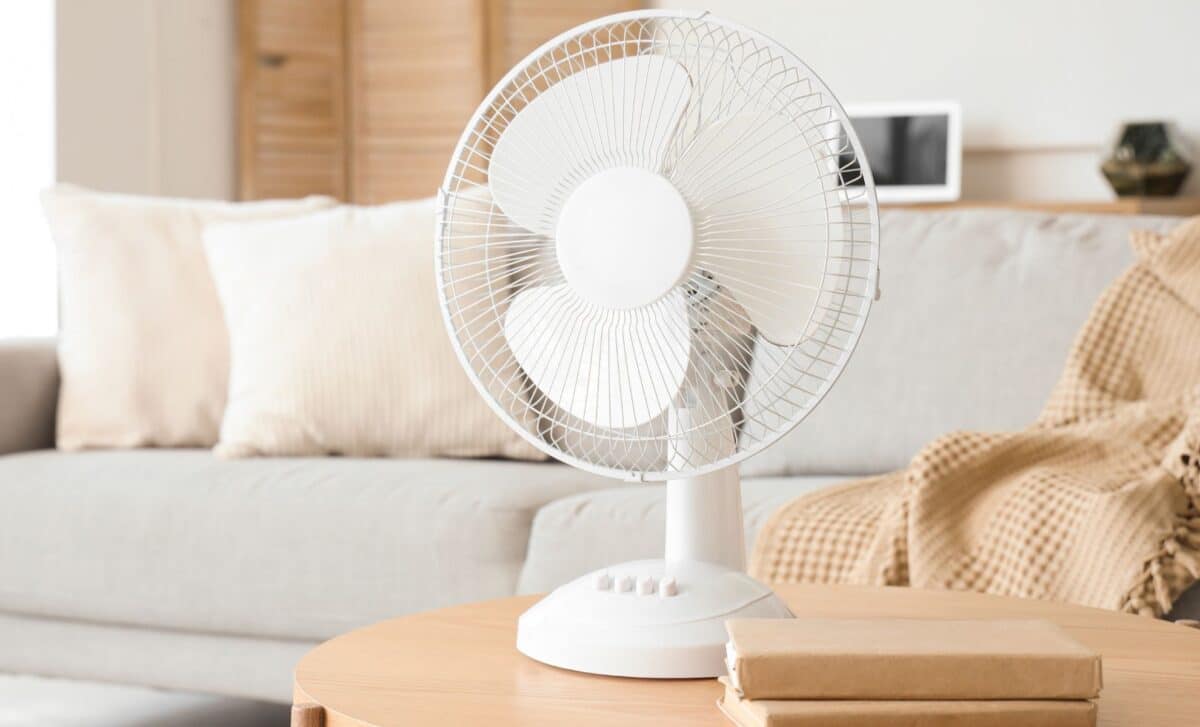
The style matters too. Desk fans are great for personal cooling, while pedestal and tower fans spread air more evenly across bigger spaces.
A Few Extra Features Are Worth Checking
Airflow should be the first thing you look at, but it isn’t the only feature that affects performance. Bigger blades can move more air, while an oscillating head helps spread that airflow across the room instead of blowing in one spot all day.
If you’re planning to use your fan at night, noise level is another feature worth considering. A quieter model can make a big difference when you’re trying to sleep during a heatwave. Extra features like a timer, multiple speed settings, or a night mode can also make everyday use more comfortable.