Limescale stains, yellow marks at the bottom of the bowl and unpleasant odors that seem to come back overnight… keeping toilets clean can sometimes feel like a never-ending task. For years, many people relied on powerful chemical descalers to get the job done.
But a growing number of homeowners are now switching to a much simpler solution made with ingredients they already have at home. The recipe is surprisingly basic, takes only a few minutes to prepare and has become a favorite among people looking for an easier way to deal with stubborn buildup.
Why People Are Getting Tired Of Traditional Toilet Cleaners
Most toilet cleaners on supermarket shelves are designed to remove limescale quickly. They often promise sparkling results and long-lasting freshness. In reality, many people find themselves using these products again and again as stains gradually return.
Another common complaint is the smell. Some formulas have strong fragrances or chemical scents that linger long after cleaning. For households looking to simplify their cleaning routine, that can be a major drawback.
Limescale is usually the real culprit behind many toilet bowl problems. It builds up slowly under the rim and around the waterline, creating rough surfaces where dirt and bacteria can settle more easily. Over time, this can lead to stains and recurring odors.
Instead of constantly reaching for stronger products, some homeowners have started focusing on removing the limescale itself. That’s one reason homemade cleaning mixtures have become so popular. They are inexpensive, easy to make and often rely on ingredients that already serve multiple purposes around the house.
Experts Say the Traditional Way of Cooking Corn May Not Be the Healthiest, Here’s What They Recommend Instead
The Easiest Recipe Everyone Is Making
This homemade toilet cleaner combines three everyday ingredients: hot water, white vinegar and liquid black soap. The recipe is straightforward. Mix 250 ml of hot water with two tablespoons of liquid black soap, then slowly add 150 ml of white vinegar. Stir gently and pour the mixture into a bottle or container that makes application easy.
White vinegar does the heavy lifting when it comes to breaking down mineral deposits. It has long been used as a natural descaler in kitchens and bathrooms. Liquid black soap adds a slightly thicker texture that helps the mixture stay on the sides of the toilet bowl instead of immediately running into the water.
The result isn’t a thick gel like commercial products. Instead, it creates a coating that sticks to surfaces long enough to help loosen buildup where it’s needed most. The key is applying the mixture under the rim of the toilet bowl. This is where limescale often accumulates unnoticed.
Why Cleaning a Little More Often Works Better
One reason this method appeals to so many people is that it encourages a simpler approach to cleaning. Rather than using large amounts of product occasionally, the idea is to maintain the bowl regularly with smaller treatments.
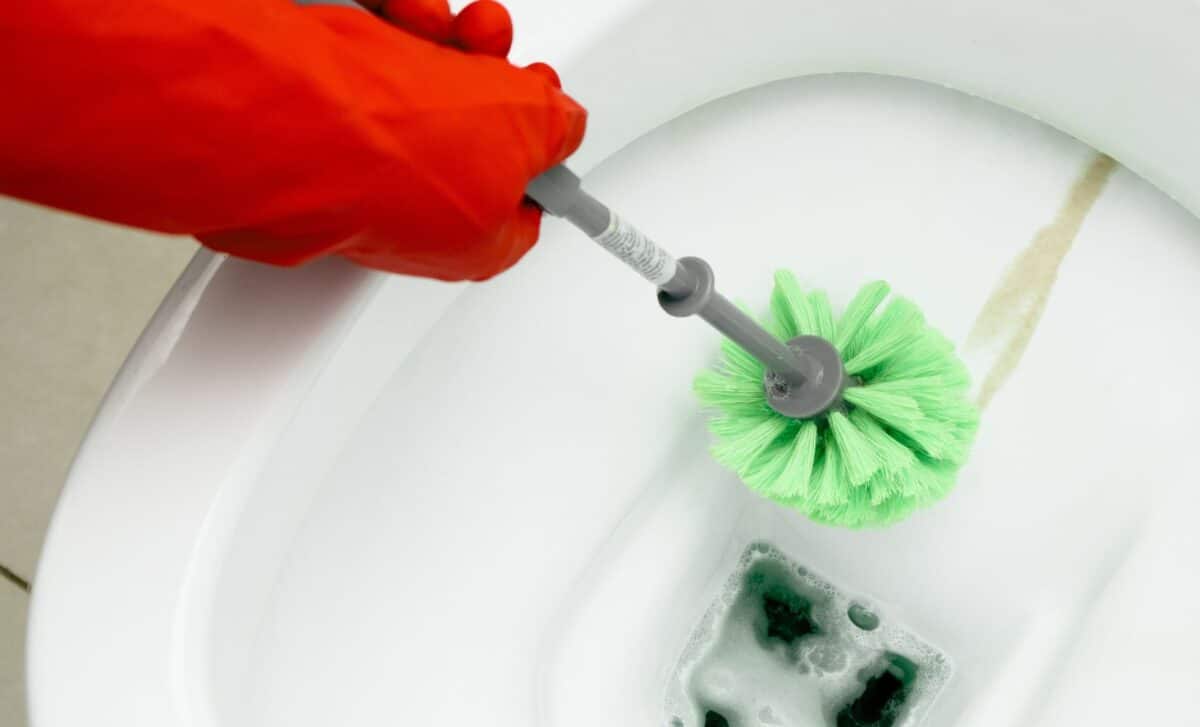
After applying the mixture, leave it to sit for around 20 to 30 minutes. Then give the bowl a quick scrub and flush. If some stains remain, repeating the process is usually more effective than using a larger amount all at once.
Regular maintenance can also help reduce odors. Limescale tends to trap particles that contribute to unpleasant smells, so keeping those deposits under control often makes a noticeable difference.