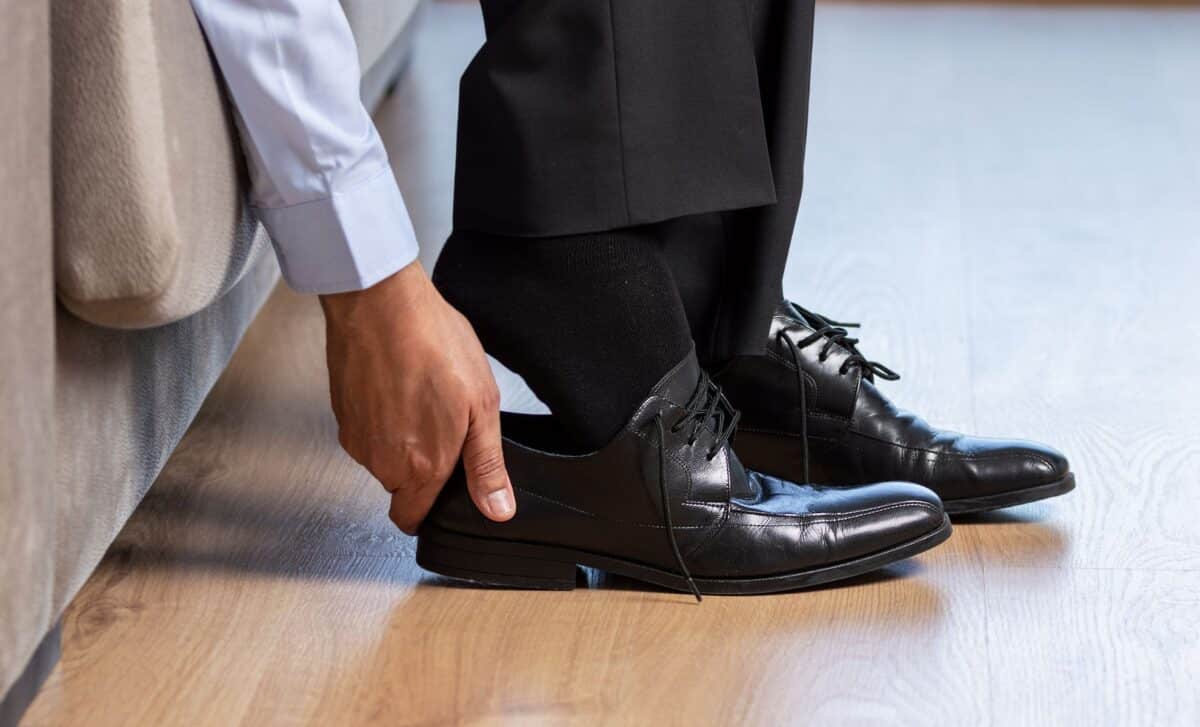
Does asking people to take off their shoes really make your home cleaner? Not necessarily. A hygiene specialist and microbiologist offers a different take on this common habit and questions what actually matters when it comes to keeping a home clean.
A Common Habit That Feels Right But Isn’t Always Backed By Science
Taking off shoes at the entrance has become routine in many households. It often feels like an obvious way to keep indoor spaces clean and under control. Yet this reflex is driven more by perception than by strong scientific evidence.
Christophe Mercier Thellier, a hygiene expert and microbiologist, recently addressed this topic during a podcast interview, where he questioned the real impact of wearing shoes indoors. When asked whether keeping shoes on inside is particularly unhygienic, he does not describe it as a major risk. In his view, contamination does not happen as easily as people tend to believe.
Putting Aluminum Foil In Kitchen Drawers: What It’s For And Why Thousands Of People Are Doing It
Everyday Habits That Matter More Than Shoes
This perspective becomes clearer when looking at daily routines. While many people are strict about removing their shoes, they often overlook other habits that may introduce dirt or contaminants into the home.
He explained that: “Someone who says they take off their shoes, but at home puts the package or handbag on the table, in the end it’s as if they were putting their shoes on the table.”
Focusing only on shoes can therefore create a false sense of cleanliness. According to the expert, it is more useful to pay attention to everything that comes into contact with surfaces, not just what is on your feet.
Microorganisms Versus Chemical Products
Also, the specialist does not enforce a strict no-shoes rule in his own home. He explained that floors are not a primary source of contamination in normal conditions.
“We don’t contaminate ourselves through the floor. Bacteria, fungi, viruses don’t jump.’ The real risk? Chemicals from overcleaning. So before you rush to line your drawers with aluminum foil, ask yourself: is the habit helpful or just harmless?” the expert said.
In many cases, chemical substances used excessively may pose more of a concern than microorganisms themselves. To illustrate this idea, he refers to soil. Fruits and vegetables grow in it and contain a vast number of microorganisms, yet they are consumed every day without causing harm.
For everyday upkeep, stick with the simple stuff: water, white vinegar, and a microfiber cloth. That’s really all you need to keep things clean without dousing everything in chemicals.