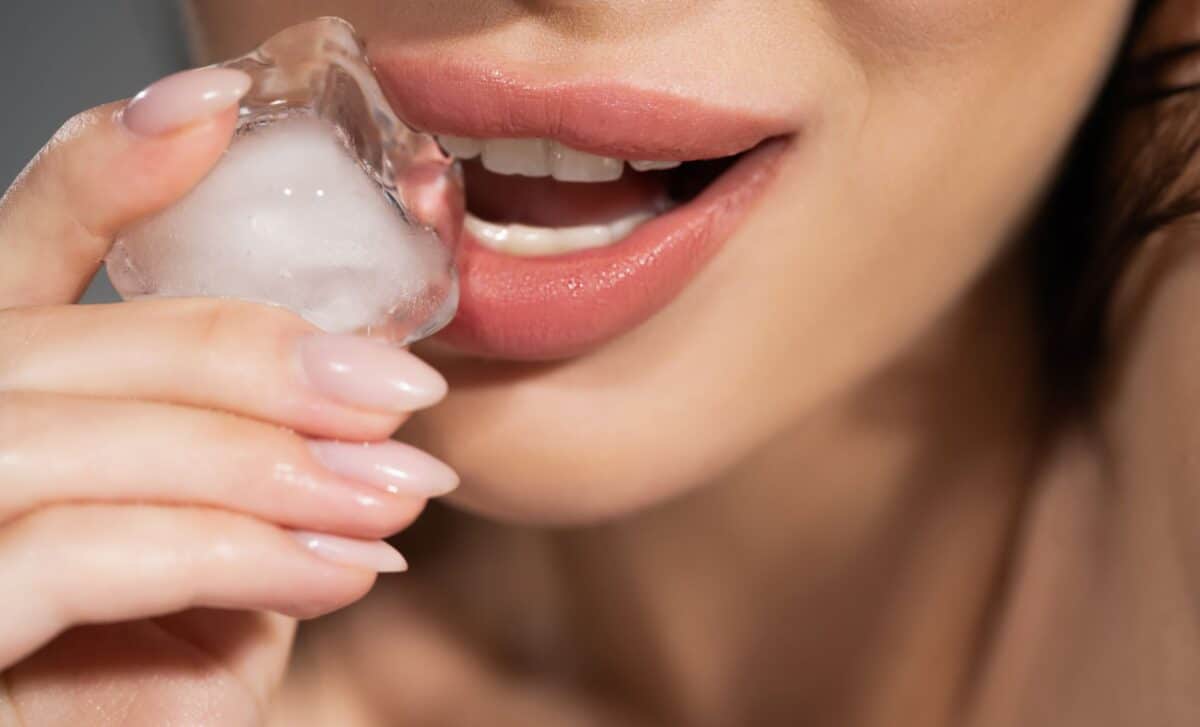
When the weather gets really hot, it’s natural to look for anything that can help you cool down. A cold drink, a fan, an ice cream… and for many people, chewing on ice cubes. It feels refreshing, it’s easy, and it seems completely harmless.
But according to dentists, this small habit can actually do more damage than you might expect. While crunching ice might bring instant relief from the heat, it can also weaken your teeth and even lead to painful dental problems. Here’s why it’s better to let those ice cubes melt instead.
Chewing Ice Cubes Can Damage Your Teeth
Even though ice is just frozen water, it’s incredibly hard. When you bite down on it, your teeth absorb a lot of pressure. According to a release published by University of Utah Health, this repeated pressure can create tiny cracks in the enamel over time.
“Think of a windshield crack,” Rich Homer, section head of Dental Conservation and Restoratin at the University of Utah School of Dentistry, said. “Once a chip sets in, it can spread and form a bigger crack. This can happen to teeth with or without fillings in them.”
If you already have fillings, crowns or veneers, the risk is even higher. These dental restorations can crack or become damaged when they’re repeatedly exposed to the force of chewing ice.
The cold itself can also be a problem. Chewing on frozen pieces can create a sudden temperature change that may irritate the nerves inside the tooth. That’s why some people feel a sharp pain or increased sensitivity after chewing the frozen water cube. Your gums aren’t immune either. Constant exposure to very cold ice can irritate the gum tissue and may contribute to gum recession.
Forget Marathon Cleaning Sessions, This 60-Second Habit Could Keep Your Bathroom Cleaner for Days
Better Ways To Stay Cool During A Heatwave
Fortunately, there are safer ways to cool down without putting your teeth at risk. Water-rich fruits such as watermelon and melon provide a refreshing snack while helping you stay hydrated. Chilling them in the refrigerator offers a cooling effect without exposing your teeth to excessive force or extreme temperatures.
Crunchy vegetables like cucumber and carrot sticks are another good alternative if you’re craving something crisp. Drinking cool water, rather than ice-cold water, is also an effective way to stay comfortable during hot weather.
Health experts continue to stress that staying hydrated is one of the most important ways to cope with a heatwave. Although chewing ice may feel refreshing for a few moments, it does not significantly lower your body temperature and can increase the risk of dental damage. Choosing gentler ways to cool off is a simple step that helps protect your oral health throughout the summer.