As temperatures rise, ants become a common sight in gardens, on patios, and around balconies. While chemical repellents remain widely available, many homeowners prefer trying simple household remedies before turning to stronger solutions. One of the more unusual tricks making the rounds involves something that would normally end up in the trash: cucumber peels.
Why Cucumber Peels Might Bother Ants
The idea behind this home remedy is fairly straightforward. Ants rely heavily on scent trails to find food and communicate with other members of the colony. When one ant discovers a food source, it leaves behind chemical signals that help others follow the same route.
Some people believe that the smell released by cucumber peels interferes with those trails. Others think there are compounds in the skin that ants simply don’t like. Either way, the result is supposed to be the same: ants become less interested in crossing the area.
The trick has been around for decades, and you’ll find plenty of gardeners who claim it works. Some even say bitter cucumber varieties are more effective than regular ones. Still, there isn’t much scientific evidence proving that cucumber peels consistently repel ants.
That doesn’t mean the method is useless. Natural remedies often produce mixed results because different ant species react differently to smells and environmental conditions. What works well in one garden may have little effect in another.
The good news is that trying it costs almost nothing. If you’re already using cucumbers in salads or snacks, the peels are essentially free.
Why Are My Fruits Falling Before They Ripen? Here’s What Your Tree Is Really Doing
How to Try the Cucumber Peel Trick
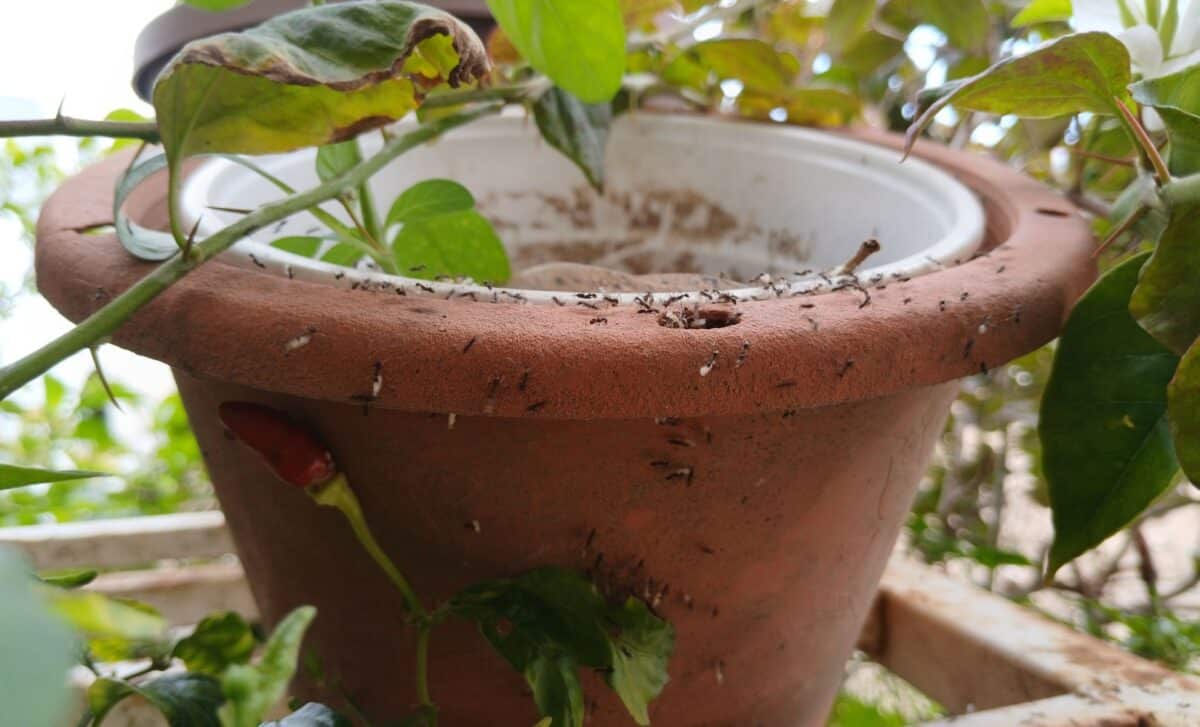
Testing this method couldn’t be easier. All you need to do is place fresh cucumber peels in areas where you’ve noticed ant activity. Many people put them directly along ant trails, around plant pots, near doorways, on balconies and patios, or close to small cracks where ants are entering the home.
Fresh peels are generally considered the best option because they release the strongest scent. As the peels dry out and begin to decompose, any potential repellent effect may become weaker.
There are different ways to try the method. Some homeowners cut the peels into small pieces and spread them around areas where ants are frequently seen. Others prefer placing larger strips directly across active ant trails to see whether the insects change direction or avoid the area altogether.
How to Make Your Outdoor Spaces Less Attractive to Ants
Even if cucumber peels help, they won’t do much if ants are finding plenty of food nearby. That’s why prevention is often more effective than any home remedy. The insects are attracted to crumbs, sugary drinks, ripe fruit, and pet food left outside. Keeping these food sources under control can make your outdoor spaces far less appealing.
Regularly cleaning tables, patios, and outdoor seating areas can also help reduce visits from foraging ants. If they’re getting indoors, sealing small cracks and gaps around windows and doors may limit their access.
Many homeowners combine cucumber peels with other popular natural remedies such as vinegar, lemon juice, cinnamon, coffee grounds, or garlic. These ingredients are often used because their strong smells may make it harder for the pests to follow their usual scent trails.