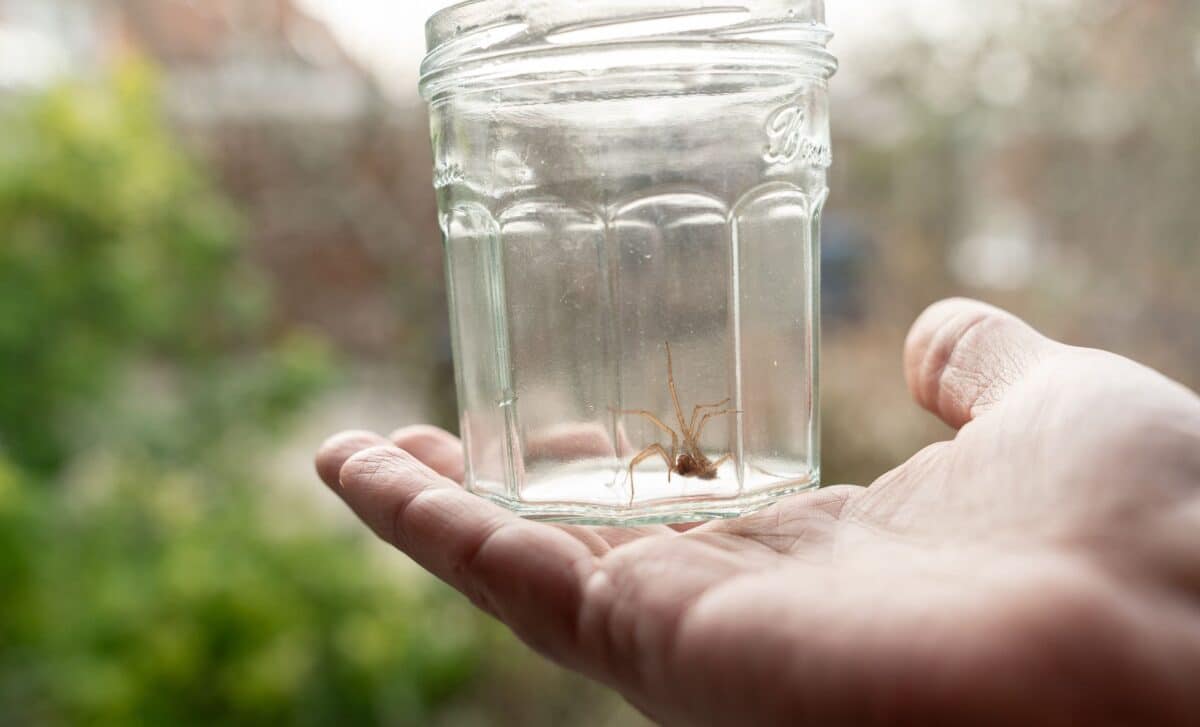
A spider appears in the corner of the living room, and the reaction is immediate: grab a glass and put it outside. It feels like the right thing to do, almost responsible. Yet this habit is based on a common misconception.
Not all spiders are meant to live outdoors. Some are perfectly adapted to indoor life, and moving them can drastically reduce their chances of survival. What seems like a harmless gesture actually deserves a second thought.
These Spiders Are At Home… For A Reason
In any house, spiders are rarely there by accident. Certain species have adapted over time to indoor environments. They benefit from stable temperatures, limited predators, and a steady supply of food. Flies, mosquitoes, and other small insects are part of their daily diet, making them quiet but effective regulators of unwanted pests.
They tend to stay out of sight, settling in corners, ceilings, or undisturbed areas. Their presence is subtle, yet useful. Removing or relocating them means getting rid of a natural form of pest control without even realizing it.
What makes them even more interesting is their complete autonomy. No chemicals, no maintenance, just a natural balance at work. A spider that has settled in your home has found suitable conditions and adapted to them over time. It is not just passing through; it is living there.
After Trying This Detergent And Sugar Trick She Got Rid Of All Her Cleaning Supplies
Putting Them Outside: A Misleading Solution
Releasing the web-spinner into the garden may seem like a kind act. In reality, it can be harmful. A spider used to indoor conditions suddenly faces temperature changes, humidity, wind, predators, and even pesticides.
This abrupt transition often lowers its chances of survival. The stable indoor environment is replaced by a far more demanding one. The idea of “returning it to nature” sounds positive, but it does not always match the spider’s needs.
There is also a less visible impact. Introducing an eight-legged arachnid into an environment where it does not belong can create interactions with local species. In some cases, this may lead to competition and small-scale ecological imbalances that often go unnoticed.
A Smarter Way to Deal With Spiders
Not all Crawling insects should be handled the same way. Some species naturally belong outdoors and can be safely released. Others depend on indoor environments to survive.
When in doubt, the safest option is to avoid putting them outside. Moving the spider to a less visible area, such as a garage or basement, is often a better compromise. It reduces discomfort while preserving its chances of survival.
For those who want to be more precise, simple tools and apps now make it easier to identify species. This helps avoid mistakes and encourages more informed decisions.