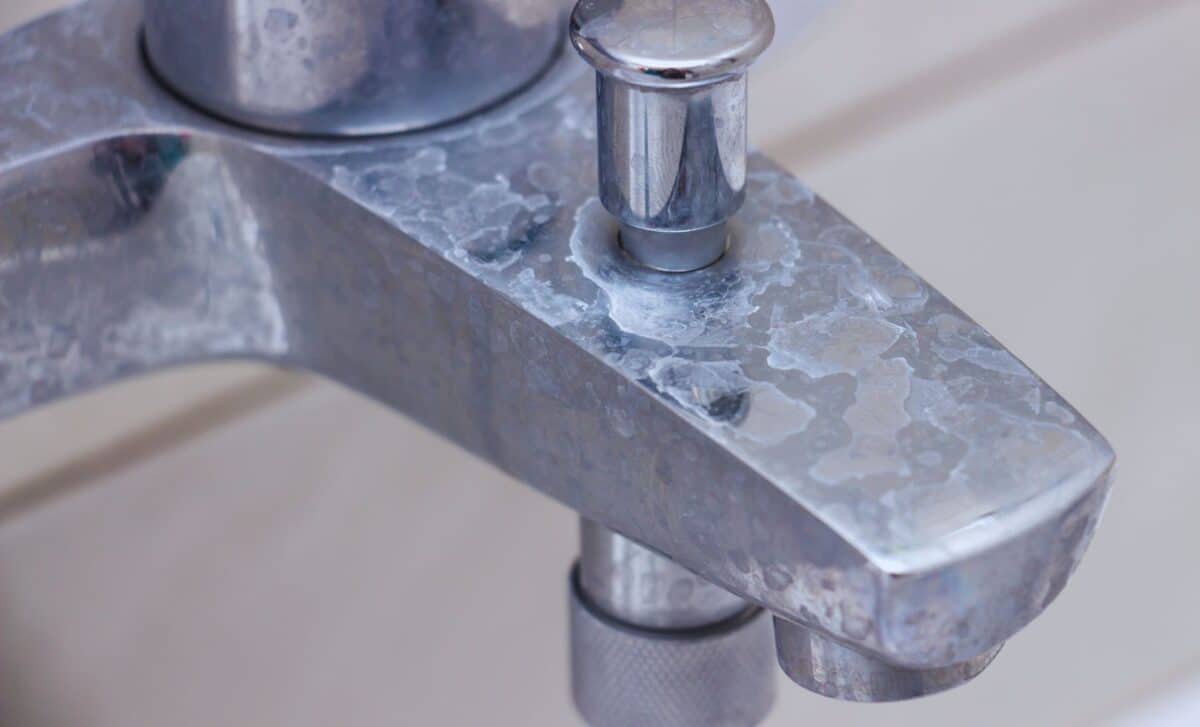
Limescale is a common issue in homes exposed to hard water. It gradually builds up on faucets, sinks, and shower surfaces, leaving behind stubborn white marks. In response, simple and practical solutions are gaining attention.
The combination of baking soda and soda water is based on a straightforward chemical principle and a mild mechanical action. Easy to prepare, this mixture targets mineral deposits directly without requiring complex or expensive cleaning products.
A Simple Reaction That Makes Cleaning Easier
Baking soda has a mildly abrasive texture that helps lift residue without scratching surfaces. It is also alkaline, which enhances its ability to break down certain types of buildup. Soda water, known for its carbonation, creates a light effervescent action that helps dislodge limescale particles.
When combined, these two elements create a dual-action effect: chemical and mechanical. This type of reaction is widely used in household cleaning because it is effective while remaining gentle on materials. Surfaces like chrome and stainless steel tolerate this method well when applied carefully.
Why a Quick Rinse After Detergents Isn’t Enough, And How It’s Damaging Your Hands Daily
Why Limescale Builds Up So Quickly
Limescale forms from minerals found in water, mainly calcium and magnesium. When water evaporates, these minerals remain and stick to surfaces. Over time, the buildup becomes harder and more visible. Areas with frequent water contact, such as faucets and sinks, are especially affected.
The longer limescale is left untreated, the more difficult it becomes to remove. Cleaning specialists often recommend regular maintenance to prevent deposits from becoming deeply embedded and requiring stronger cleaning methods.
A Cleaning Method That Won’t Slow You Down
Preparing this mixture takes only seconds. Adding a small amount of soda water to baking soda creates a paste that can be applied directly to affected areas. After letting it sit briefly, gentle scrubbing with a soft sponge helps remove the deposits.
Rinsing with warm water clears away residue, while drying helps prevent new marks from forming. This method can be used regularly without damaging surfaces, as long as abrasive tools are avoided. It fits easily into a weekly cleaning routine.