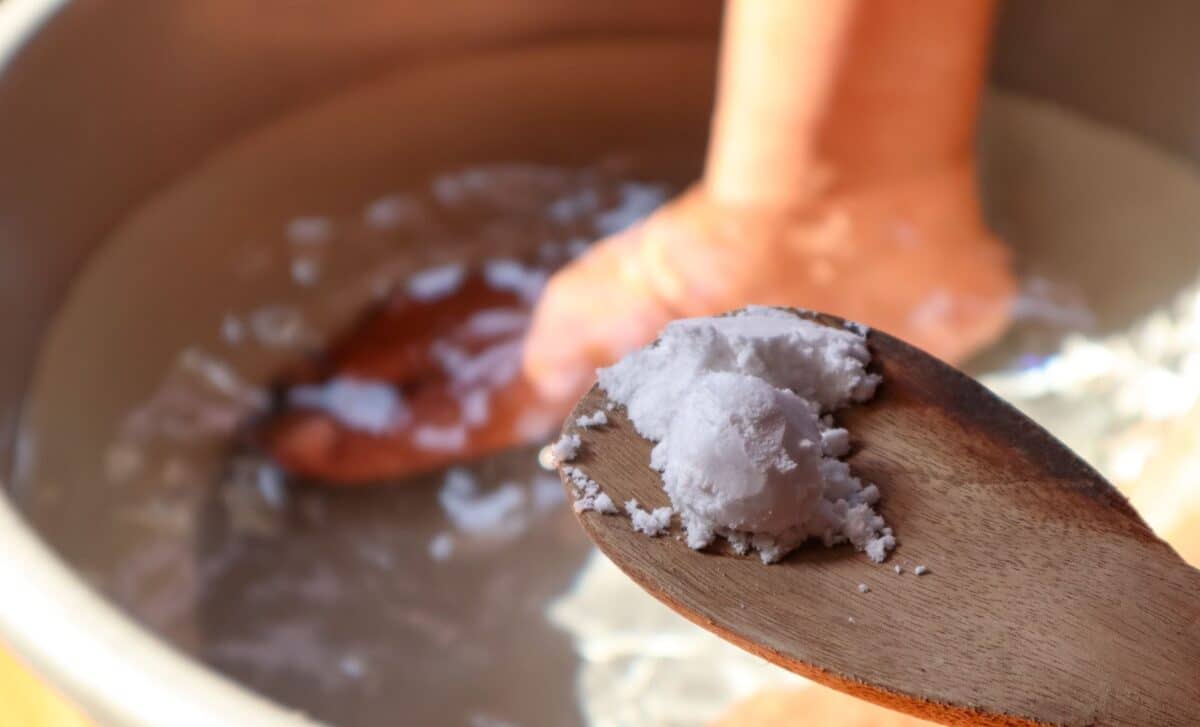
If you’ve been scrolling through social media lately, you’ve probably seen a few trendy foot care hacks that seem like they’re straight out of an old health book. One of the most popular ones is the vinegar foot soak. This natural remedy is praised for its antifungal, antibacterial, and even skin-softening properties. But does it really work? Can you say goodbye to foot odor, dry skin, and athlete’s foot with just a little vinegar and warm water?
Why Vinegar?
Vinegar, especially white vinegar, is a kitchen staple that’s often used as a natural cleaner around the house. But beyond its role in the kitchen, it has properties that can be surprisingly helpful for taking care of your feet. As explained by Liv Hospital, it’s the acetic acid in vinegar that gives it its antibacterial and antifungal properties.
On health websites and in online discussions, vinegar is often hailed as a superhero against foot odor, and for good reason. The acetic acid in vinegar can kill the bacteria responsible for those unpleasant smells. Its acidity creates an environment that’s hostile to germs, helping to keep your feet smelling fresher, or at least less stinky.
You’ve Been Throwing Away Coffee Grounds for Years, Here’s What They Do on Your Windowsills
A Natural Deodorizer for Your Feet
Let’s start with odor. You’ve probably experienced that uncomfortable moment of taking off your shoes after a long day and having the entire room filled with the unmistakable scent of stinky feet. Vinegar could be the answer to this embarrassing problem. In fact, laboratory studies have shown that acetic acid can kill the bacteria responsible for foot odor. If you suffer from sweaty feet, a vinegar soak might bring you some relief.
Vinegar may also help with fungal infections like athlete’s foot (tinea pedis), though the evidence here isn’t as strong. A study in a lab setting showed that acetic acid can inhibit fungal growth, but there’s still not enough solid proof to claim it’s a miracle cure for athlete’s foot. If you have mild symptoms, a vinegar foot soak could complement your treatment, but don’t expect instant results.
How to Safely Make a Vinegar Foot Soak?
Now that you’re sold on the benefits, let’s talk about how to use vinegar properly to avoid irritation. To create a safe vinegar foot soak, start by mixing one part vinegar with two parts warm water in a basin. Soak your feet for 10 to 20 minutes, allowing time to relax. Afterward, make sure to dry your feet thoroughly, paying attention to the spaces between your toes. Lastly, moisturize your feet well to prevent dryness, as vinegar can be a bit drying.
What to Watch Out For
Like any home remedy, vinegar foot soaks come with a few precautions. First, avoid this treatment if you have open cuts or wounds on your feet. The acid in vinegar can cause burning sensations and slow down the healing process. If you have sensitive skin or conditions like eczema, it’s a good idea to test a small patch of skin before soaking both feet.
If you have diabetes or circulation problems, it’s important to consult with a doctor before using a vinegar foot soak. These conditions can make your feet more vulnerable to infections, and vinegar’s acidity could complicate the healing process.