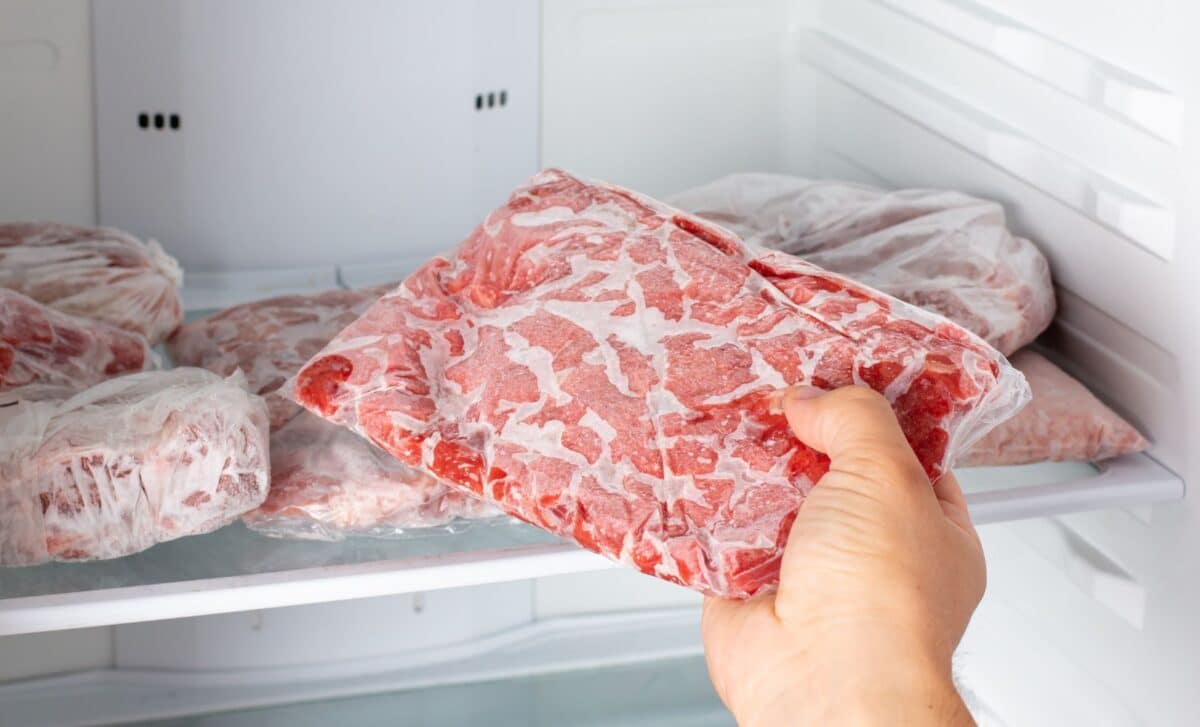
Freezing meat is one of the easiest ways to make it last longer without worrying about it going bad. As long as your freezer stays at 0°F (-18°C), the meat is technically safe to eat for a very long time. But here’s the catch: even if it’s still safe, the taste, texture, and overall quality won’t stay the same forever. Knowing how long different types of animal proteins keep their quality helps you avoid disappointing meals.
What Freezing Actually Does To Meat
As explained in this research, when you freeze meat, the water inside it turns into ice, which stops bacteria from growing. That’s why freezing works so well. Most of the protein and nutrients stay intact, so you’re not losing much in terms of nutrition.
Still, freezing isn’t perfect. Over time, the fat can slowly break down, and the meat can lose moisture. That’s what leads to dry texture or slightly off flavors after long storage. How well it holds up depends a lot on how fresh it was when you froze it, how it’s packaged, and whether your freezer temperature stays stable.
This Hidden Pink Beach in Europe Just Beat the World’s Most Famous Destinations
What Different Meats Really Last in the Freezer
Even though it can last “forever” safely, there are recommended time frames if you want it to still taste good. Beef, like steaks or roasts, usually keeps its quality for about six to twelve months.
Pork doesn’t keep quite as well because of its fat content, so it’s better to use it within four to six months. Lamb and veal are pretty similar to beef and can last around six to nine months, sometimes longer if stored well.
For chicken and turkey, whole birds can last up to a year, while smaller pieces are better used within about nine months. Ground meat, burgers, and sausages don’t last as long because more of the surface is exposed to air. These are best used within three to four months. Cooked meat also has a shorter window, usually around two to three months before the quality drops.
How To Freeze It The Right Way
If you want your meat to taste good later, freezing it properly makes a real difference. Freeze it while it’s still fresh, ideally within a couple of days after buying it, and limit air exposure with tight packaging or vacuum sealing.
Cutting it into portions helps you only thaw what you need, and adding a date keeps things organized. A stable freezer temperature is also key, since fluctuations can damage texture.
For thawing, the fridge is the safest and most reliable method. If you’re short on time, use the microwave and cook immediately. Avoid thawing at room temperature, as it increases the risk of bacteria.
Is Your Frozen Meat Still Safe? How to Tell
Sometimes meat looks fine frozen but tells a different story once thawed. Freezer burn is one of the most common issues, showing up as pale or grayish patches. It’s not dangerous, but it can make the meat dry and less enjoyable.
A weird or slightly rancid smell is another warning sign, especially with fattier cuts. You might also notice a darker color, a mushy texture, or extra liquid after thawing. In those cases, the meat is often still safe if handled properly, but it’s better used in slow-cooked meals rather than something like a grilled steak.