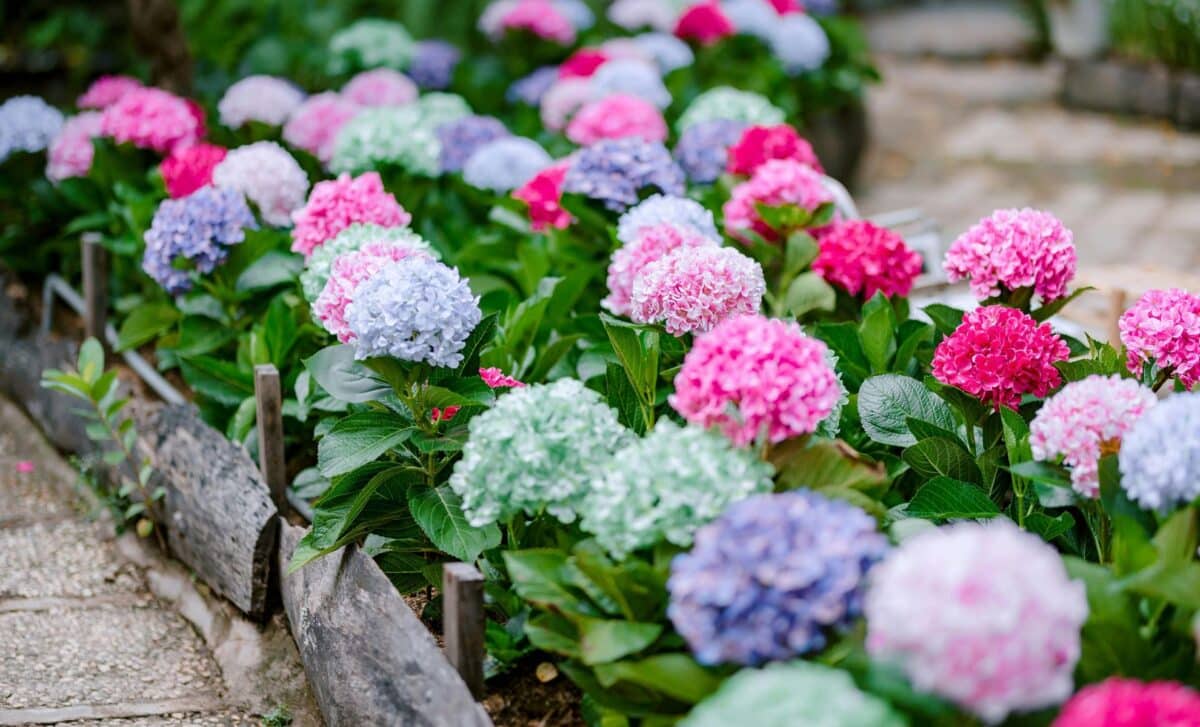
Hydrangeas are known for their lush blooms and vibrant colors, but what many gardeners don’t realize is that their color isn’t fixed. With the right conditions, and a simple kitchen ingredient like vinegar can influence whether your hydrangeas turn pink, blue, or somewhere in between.
Why Hydrangeas Don’t Always Stay the Same Color?
As explained by Hydrangea.com, it all comes down to the soil pH. Certain types of hydrangeas react directly to it, which explains why the same plant can produce blue, pink, or even purple flowers depending on where it grows.
In acidic soil, the flowers tend to turn blue. In more neutral conditions, they lean toward purple. And in alkaline or chalky soil, they stay pink. This shift is linked to aluminum in the soil. The more acidic the soil is, the more available that aluminum becomes to the plant, which changes the flower color.
So it’s not just about the plant itself, but the conditions around it. Two identical hydrangeas can end up looking completely different if they’re planted in different soils.
Before You Get Rid of That Worn-Out Hose, See What You Can Do With It
Vinegar as a Simple, Everyday Solution
Since vinegar is naturally acidic, it can gently lower the soil’s pH over time. As the soil becomes more acidic, aluminum becomes easier for the plant to absorb, encouraging those blue tones to appear. The method is simple: you just need a small amount of vinegar mixed with water, poured at the base of the plant. Done regularly, this gradually shifts the balance of the soil.
The change isn’t instant, but after a few weeks, you may start to notice the color evolving. One of the advantages of this approach is how easy it is to control. Once the flowers reach the shade you like, you can just reduce or stop the treatment.
What to Keep in Mind for Better Results
Vinegar helps, but it works best when everything else is aligned. The type of water you use matters more than people think. If your tap water is high in minerals, it can slowly raise the soil’s pH and cancel out the effect. Rainwater is usually a better option.
Also, some soils are more resistant to change, so results can vary from one garden to another. Supporting the process with natural materials like coffee grounds or pine needles can help maintain a slightly acidic environment.
It’s also important not to overdo it. Making the soil too acidic can stress the plant and affect its growth. The goal is to adjust things gradually, not force a rapid change.