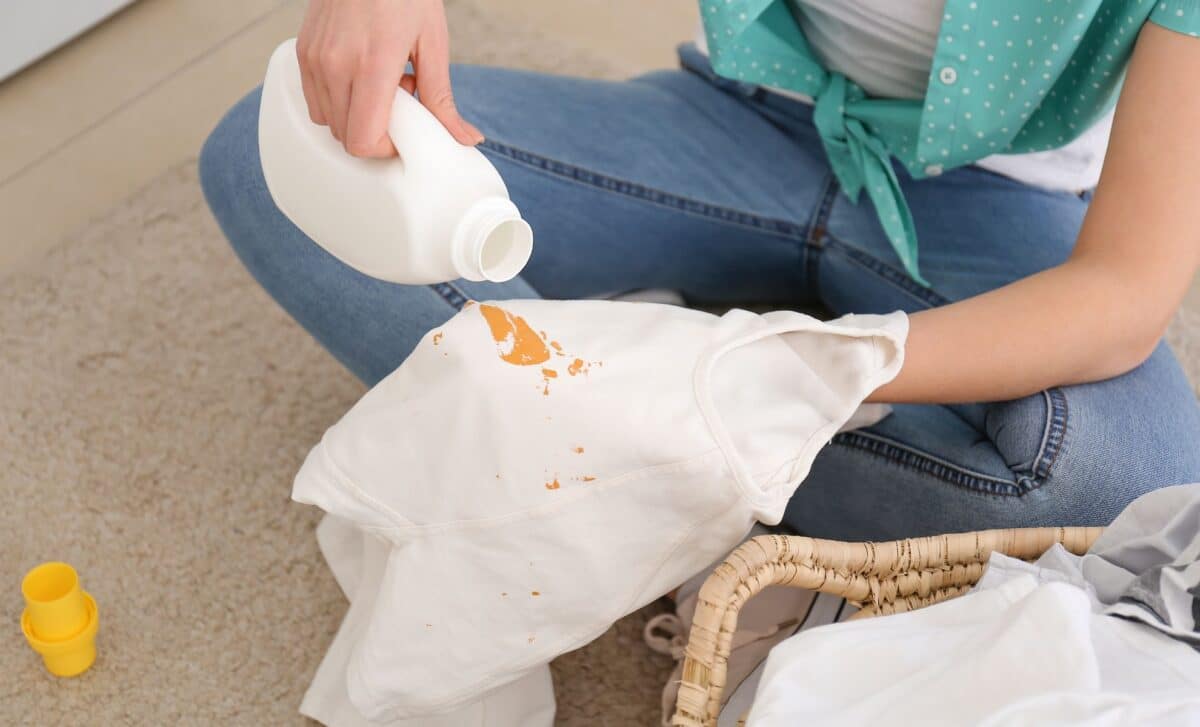
A glass of red wine spills on your shirt. The dog has an accident on the new rug. A drop of ink hits the couch. It’s the kind of stains that feels permanent until you learn the tricks cleaning pros rely on. From grass to grease and coffee to blood, these stains look stubborn, but with the right method, they don’t stand a chance.
The Biggest Culprits
Red wine can feel like a death sentence for fabric, but laundry expert Mary Marlowe Leverette offers a counterintuitive reality check: club soda isn’t any more effective than plain water. Her advice is simple and methodical: turn the garment inside out, rinse it with cold water, then soak it in a solution of oxygen bleach and cool water for at least an hour (and longer if the stain is stubborn).
For upholstery, Patric Richardson, better known as The Laundry Evangelist, recommends dabbing the area with a bleach alternative diluted in water, then blotting with hot water. One caution, though: hydrogen peroxide can lighten dark fabrics and carpets, so it’s best to spot-test first.
Ink is tricky because not all of it behaves the same. Washable pen marks often lift with rubbing alcohol applied using a cotton swab, but Sharpies and other permanent markers tend to resist. The key is speed, and working from the outer edges inward to keep the stain from spreading.
Grease, meanwhile, is a chemistry problem. A 50/50 mix of white vinegar and water can help break it down before washing. Richardson also stresses one rule that saves a lot of clothing: never use the dryer until the stain is fully gone.
The $1 Fish You Need for Younger-Looking Skin, and It’s Celeb-Approved!
The Messiest Mix: Pet Urine, Blood, and Mud
Some stains don’t just leave a mark. They can also leave behind odor and bacteria. Pet urine is a classic example. Start by blotting up as much liquid as possible with paper towels or a clean cloth. Then fully saturate the area with a mix of distilled white vinegar and water, using a soft brush to push the solution deep into the fibers. Once it dries, cover the spot with baking soda and mist it with a hydrogen peroxide-and-water solution.
Blood stains call for patience and precision. Stick to cold water only, because hot water can “cook” the proteins into the fabric and set the stain. Apply a heavy-duty laundry detergent or stain remover, work it in gently with a brush, and let it sit. If the stain is stubborn, soak the item in an oxygen bleach solution for up to four hours.
Mud is more straightforward, but it can still cling if you rush it. Let it dry completely first, then brush off as much as possible. After that, scrub with laundry soap and water. For rugs, finishing with a vinegar-and-water rinse can help remove leftover soap residue, which can attract more dirt later.
The Messes That Never Quit: Grass, Coffee, and Countertops
Grass stains from outdoor days respond well to enzyme detergents, including Tide and Persil. Rub the detergent into the fabric, give it 15 minutes to work, and then launder as usual. When a stubborn mark remains, soaking overnight in oxygen bleach is often the next step.
Coffee can be surprisingly manageable on fabric. If you catch it quickly, flushing the stain with hot water can remove most of it. For older stains, a vinegar-and-water solution with a touch of soap can help lift what’s left.
Stone countertops like granite and marble need a gentler approach. Acidic cleaners, including vinegar and lemon juice, can etch and dull the surface. For deeper discoloration, use a paste of baking soda and hydrogen peroxide, cover it with plastic wrap, and leave it for 24 hours. Once cleaned, resealing the spot helps protect the stone.