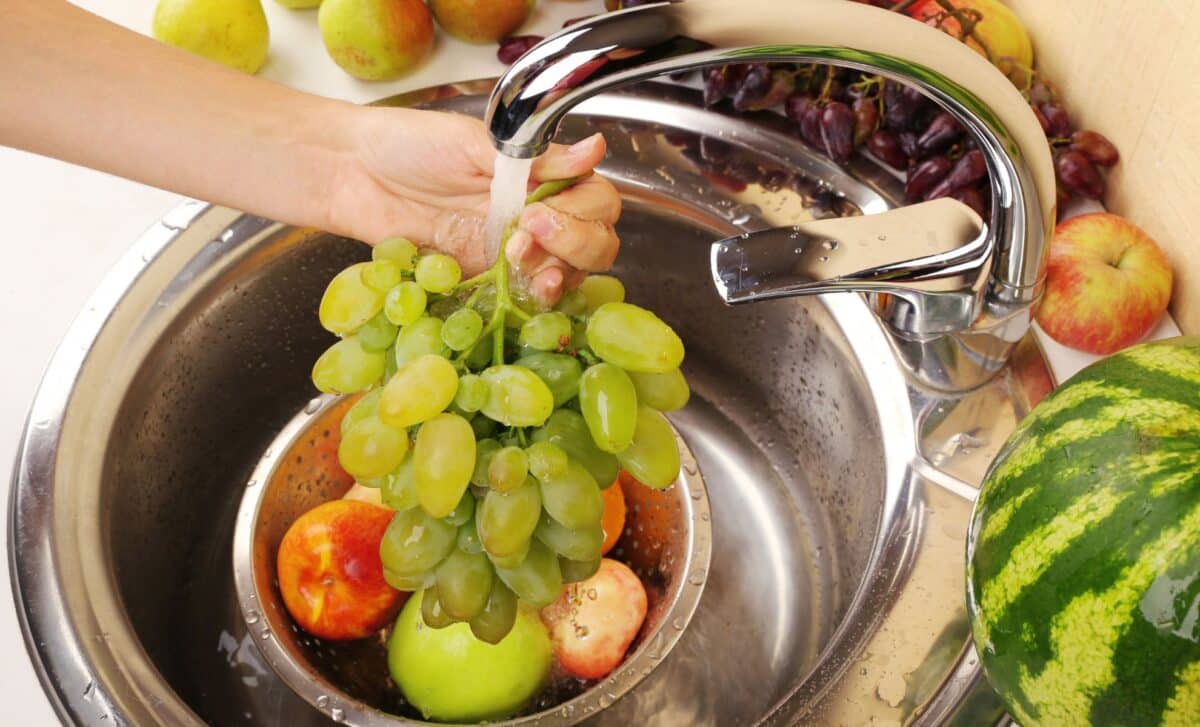
Grapes may be one of your go-to healthy snacks, but they often come with more than just natural sweetness. While they might look clean at first glance, grapes can carry invisible residues like pesticides, bacteria, and wax coatings that a quick rinse under the tap won’t remove. The good news? There’s a simple and effective way to clean them properly, using an ingredient you probably already have in your kitchen. It’s a small step that can make a big difference in how safe your fruit really is.
What’s Actually on Your Grapes?
Grapes go through a long process before reaching your plate. They’re harvested, packed, and transported under conditions that make it easy for contaminants to stick to their skin. Along with visible dirt or dust, grapes can carry pesticide residues, mold spores, and even harmful bacteria like E. coli and Salmonella. That’s why the U.S. Food and Drug Administration recommends washing them before eating.
While rinsing with cold water might help remove some surface dirt, it won’t do much to get rid of chemical or bacterial residues. To clean grapes properly, you need something more powerful, but still safe.
Burnt-Out Candles? Here’s What You Can Actually Do With the Wax That’s Left
How Vinegar Helps Clean Grapes Effectively
Distilled white vinegar is a natural and gentle disinfectant. Its main component, acetic acid, is known for its ability to break down surface residues, including pesticides, bacteria, and wax. According to several studies, vinegar can remove up to 98% of surface bacteria, including dangerous strains like E. coli and Salmonella.
Unlike store-bought produce cleaners, vinegar is non-toxic, affordable, and widely available. It’s also free of synthetic chemicals and artificial fragrances, making it a smart choice if you want an all-natural way to make your fruit safer to eat.
How to Wash Grapes With Vinegar
To get the most out of vinegar as a fruit cleaner, it’s important to dilute it with water. The strength of the solution depends on how dirty the grapes are and how sensitive you are to taste or smell.
For a stronger clean, mix 1 part vinegar with 3 parts water. For a gentler wash, use 1 part vinegar with 4 parts water. For example, you can combine 1 cup of distilled white vinegar with either 3 or 4 cups of water in a large bowl.
Once the solution is ready, place the grapes in the bowl and make sure they’re completely submerged. Gently move them around with your fingers to help loosen any residue. Let them soak for 5 to 15 minutes to allow the solution to break down anything stuck to the skin. Then, pour the grapes into a colander or mesh strainer and rinse thoroughly under cold running water. Finally, dry them well with paper towels before serving or storing.
Can You Use Other Types of Vinegar?
While distilled white vinegar is the most recommended option for cleaning fruit, thanks to its neutral taste and low cost, you can use other types if needed. Apple cider vinegar and white wine vinegar are both effective, though they may leave behind a subtle flavor or scent. It’s best to avoid strongly flavored vinegars like balsamic, which can stain grapes or affect their natural taste.