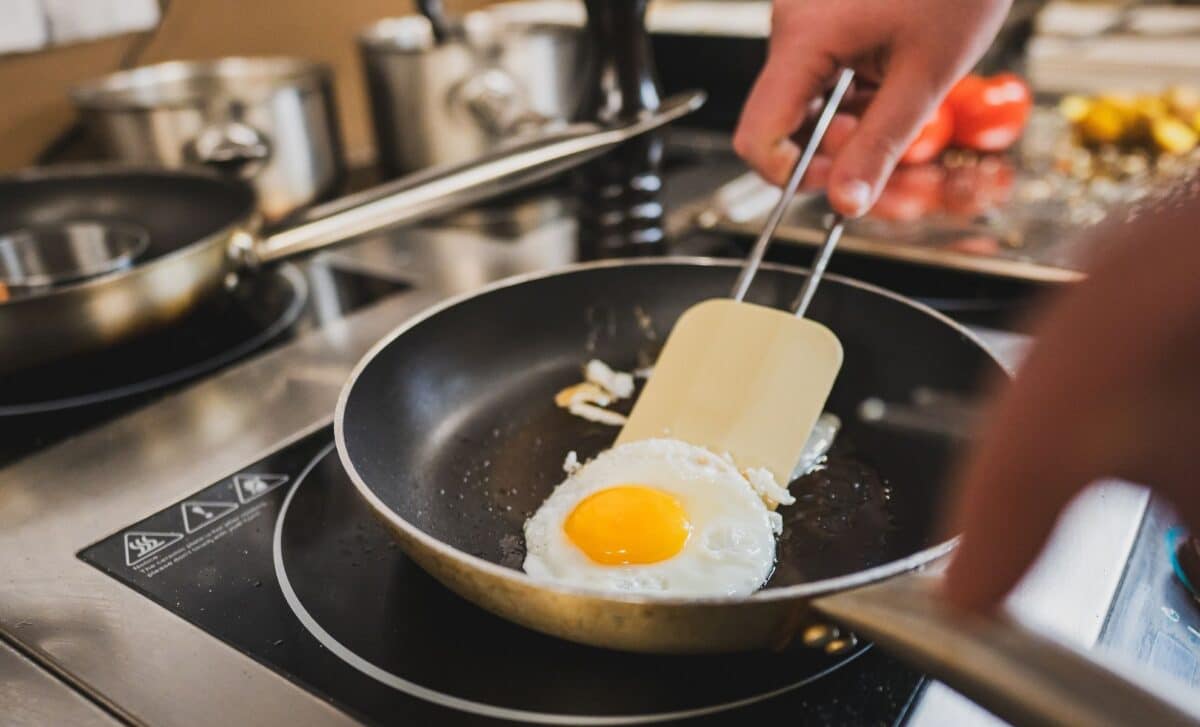
A simple cooking tip has been gaining attention: adding a few drops of vinegar to the pan before frying an egg. It may sound unnecessary at first, but there is a clear reason behind it and the results are noticeable right away.
Getting a clean, well-shaped fried egg is not always as easy as it looks. The egg white often spreads too much, cooks unevenly, or burns at the edges while the center stays underdone.
A Simple Trick For Better Egg White Texture
The benefit of vinegar comes down to basic chemistry. Its acidity helps the proteins in the egg white coagulate faster. In practical terms, this means the white firms up more quickly as soon as it hits the heat. Without vinegar, the egg white tends to spread out before it fully cooks, leading to uneven shapes and textures.
By adding just a few drops of vinegar to the pan, the egg white stays more compact and holds its shape around the yolk. The result is cleaner and more consistent, even if you are not particularly experienced in the kitchen. It does not drastically change the cooking process, but it improves control over the final result.
Another advantage is how easy it is to apply. There is no need for special tools or advanced skills. It is a small adjustment that fits seamlessly into everyday cooking. For anyone looking to get more consistent results with minimal effort, this trick is worth trying.
More and More Homes Are Using This Coffee Grounds and Baking Soda Hack for Everyday Cleaning
A Well-Known Poaching Trick, Now Used In The Pan
This technique is not new. It is inspired by the way poached eggs are traditionally made. When poaching eggs, vinegar is added to simmering water to help the egg white stay intact around the yolk. The same principle applies here, just in a different cooking method.
Using vinegar in a frying pan offers a simpler alternative. Poaching can be tricky and requires attention to timing and temperature. Frying, on the other hand, is quicker and more familiar. This method brings some of the benefits of poaching without the extra steps.
The result is somewhere between a classic fried egg and a poached one. The white is more structured, while the bottom can still develop a slight crisp depending on how you cook it. It is a practical way to upgrade a basic dish without changing it completely.
What About Taste And Smell?
A common concern is whether vinegar affects the flavor. Since vinegar has a strong taste, it is a valid question. In reality, the amount used is very small. Just a few drops are enough, and they do not noticeably change the taste of the egg.
You might notice a slight smell when the vinegar heats up, but it fades quickly during cooking. Once the egg is on the plate, the flavor remains the same as a typical fried egg.
The most noticeable difference is visual. The egg white looks more uniform and less scattered, while the yolk stands out more clearly. This gives the dish a more polished appearance, even for a quick meal.