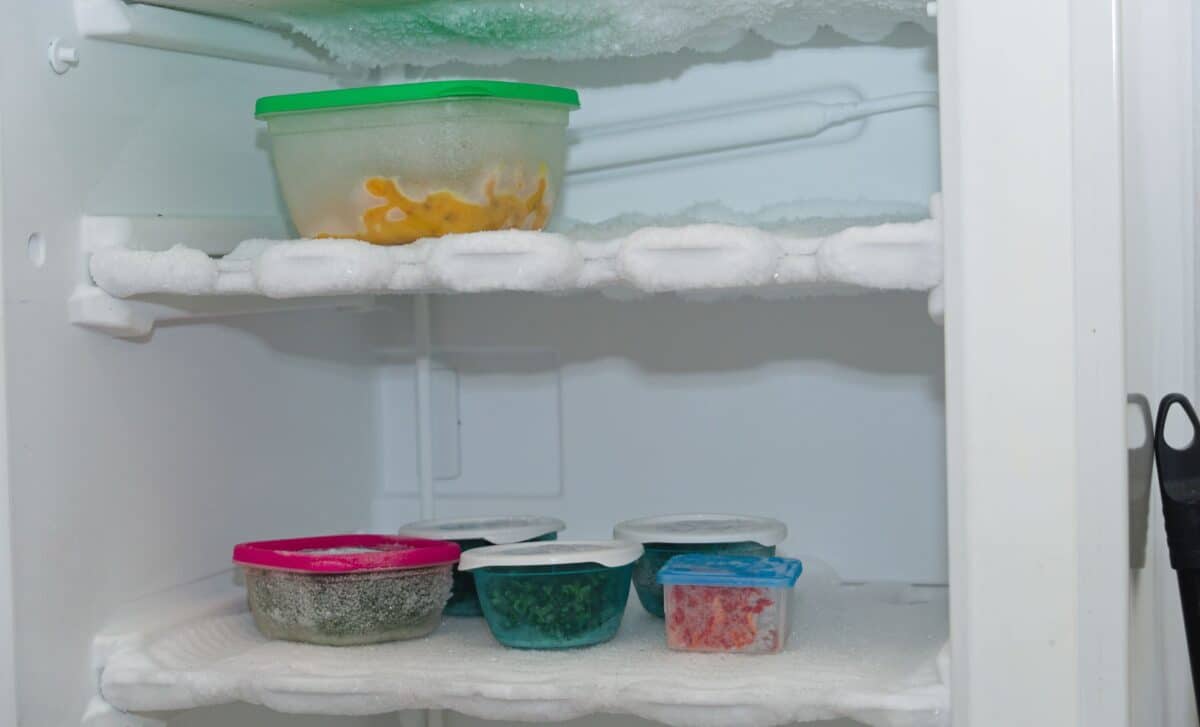
A thin layer of frost might seem harmless, but once it reaches just 3 millimetres, your freezer starts working much harder. This can push energy use up by 30 percent, along with lowering the appliance’s overall performance. Understanding why frost builds up and how to tackle it can save both your food and your electricity bill.
What Causes Ice to Build Up?
Several everyday issues lead to frost accumulation. A common culprit is the door seal. If it is dirty or worn out, warm, moist air sneaks in, condenses, and freezes. Putting hot leftovers straight into the freezer makes things worse, as the released steam quickly turns to ice.
Technical problems also play a role. A broken defrost sensor or heating element can stop the freezer from cycling off ice buildup. Setting the temperature too low is another mistake. Keeping your freezer between 18 and 20 degrees Celsius below zero is ideal. This temperature is cold enough for food safety, but not so cold that frost forms excessively.
Why Leaving Your Key in the Door Lock at Night May Not Be a Good Idea
How to Defrost Quickly and Safely
Start by unplugging the freezer and moving all food into coolers or insulated bags. Place a bowl of hot (not boiling) water inside and shut the door. The rising steam softens the ice fast. Once the frost has loosened, gently scrape it away using a plastic tool. Never use metal or knives, which can puncture the interior walls. After removing all ice, dry every surface thoroughly. For best results, repeat this process every three to six months, depending on how often you use the freezer and how quickly frost returns.
Simple Habits to Keep Frost Away
What you store food in matters a lot. Those thin plastic bags from the store are not airtight once opened. Switch to sealed freezer bags or rigid airtight containers to stop moisture from escaping and freezing onto walls.
How you arrange food is just as important. Do not cram the freezer full. Leave gaps so cold air can circulate. Put bulky items at the bottom, which is the coldest zone, and keep everyday products near the front or top.
Check the door seal regularly. A quick test works well. Close the door on a piece of paper. If you can slide it out easily, the seal is loose and needs replacing. Also, do not ignore the back of your freezer. Dust on the condenser coils forces the appliance to work harder. A simple clean every few months helps everything run smoothly and keeps the freezer frost free.