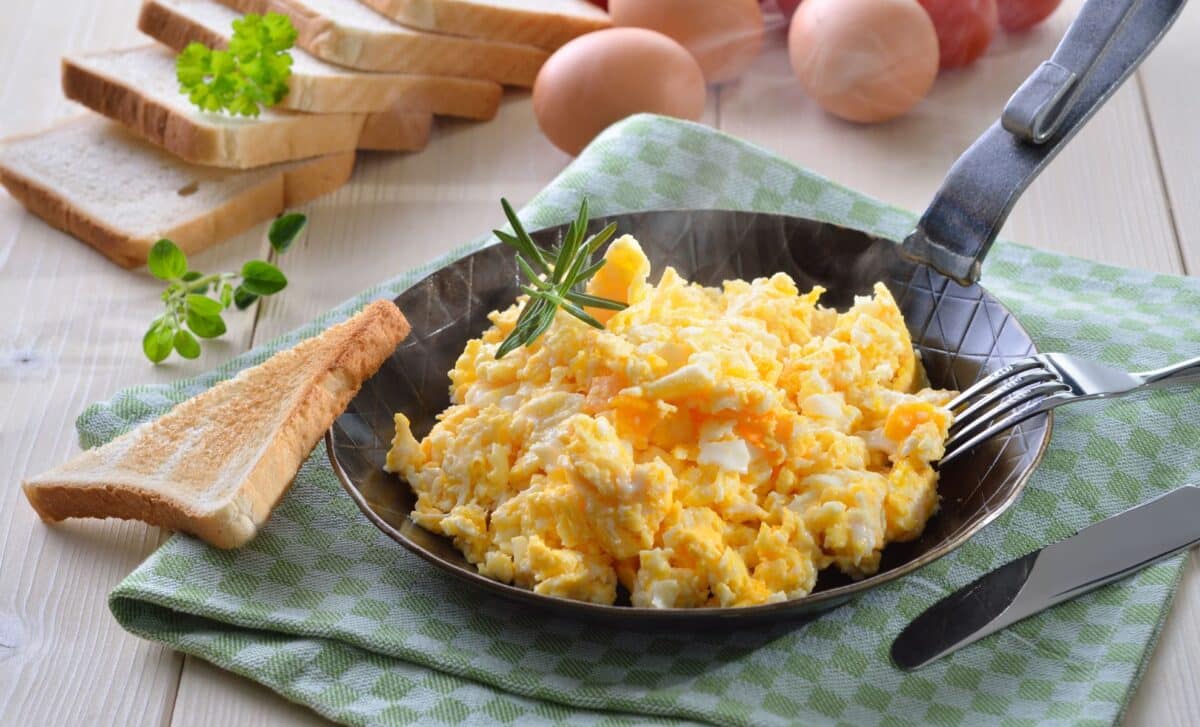
A steaming plate of scrambled eggs might look like the easiest breakfast in the book, but there’s a hidden trick that separates dry, rubbery eggs from a soft, velvety dream. Skipping just one tiny step could be the reason your morning favorite keeps falling flat. Here’s how to fix it with zero fancy tools or ingredients.
Prep Steps That Make All The Difference
Fluffy scrambled eggs don’t happen by accident, they’re built from the moment you crack your first ingredient. Start with 6 medium fresh eggs, 30 grams of cold unsalted butter (cut into cubes), a pinch of fine salt, and ground pepper (added only after cooking). That’s all you need.
Many people rush through whisking, but that’s the firstbig mistake. Don’t just break the yolks, beat the eggs vigorously until the mixture turns slightly foamy and pale yellow. This incorporates air, which leads to a creamier texture. Timing the salt is another key move, as reported by Sarah Jampel for Bon Appétit:
“Always salt the eggs before cooking. There’s a scientific reason for this: “salt inhibits the proteins in the egg yolks from binding too tightly as they heat up, which results in a moister, more tender curd.”
The Easiest Dessert Ever? This No-Bake Japanese Cheesecake Uses Only Two Ingredients
Slow Heat, Nonstop Stirring
The breakfast classic are fragile. High heat cooks them too fast, squeezes out moisture, and leaves you with a crumbly mess. Cook them low and slow on low to medium-low heat with a pan that’s warm, not hot.
Once they are in, keep stirring. Use a silicone spatula or wooden spoon to gently move the mixture in figure eights or circles, scraping the bottom and sides. This technique forms delicate ribbons instead of clumps and turns your eggs into a silky, custardy masterpiece.
The Off-heat Move That Changes Everything
This is the turning point. Remove the pan from the heat before the eggs appear fully cooked. When the texture is still visibly runny, resembling a thick soup, that is precisely the moment to act. It may feel counterintuitive, but allowing the residual heat to complete the cooking process ensures the protein-packed oval remain tender rather than overcooked.
At this stage, introduce a small cube of cold butter into the mixture. The drop in temperature immediately stops the cooking while preserving moisture. As the butter melts, it emulsifies with the eggs, creating a rich, glossy texture with a level of creaminess typically reserved for restaurant-quality dishes.