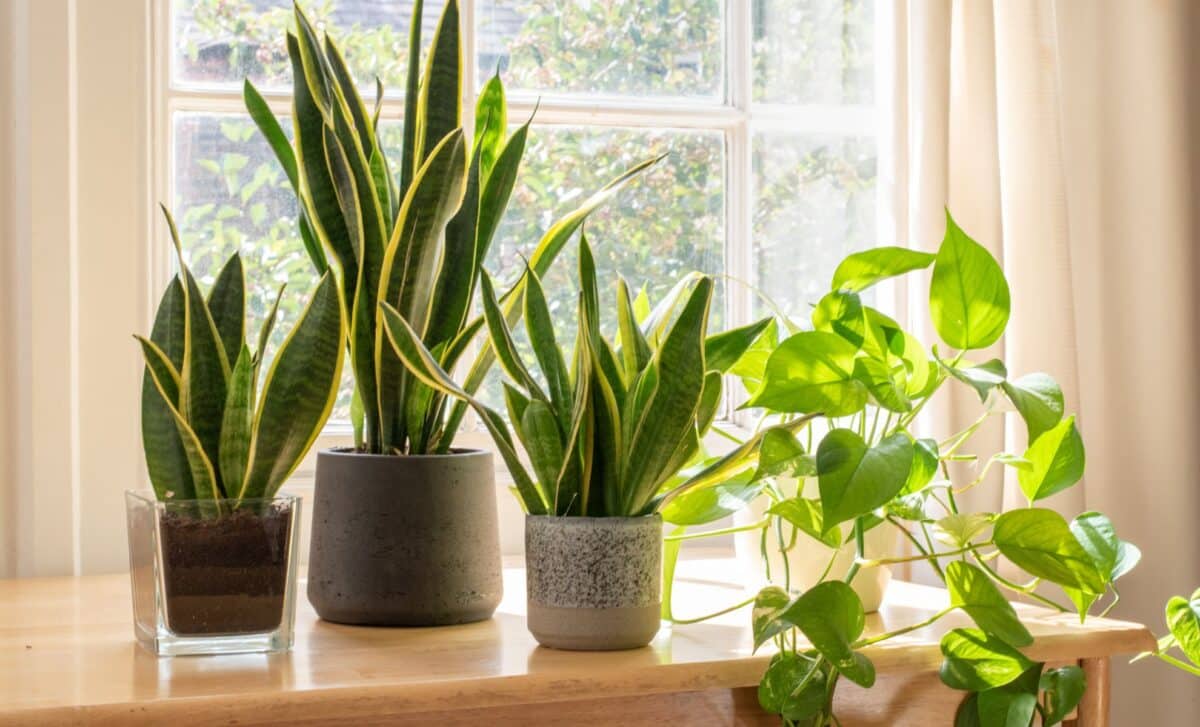
Due to air pollution, especially in some regions, or even humidity and lack of ventilation, more and more households are looking for natural solutions to clean their indoor air without using noisy and energy-consuming electrical devices. Many are unaware that a simple plant can replace these gadgets.
It’s ivy, or Hedera helix, a popular and accessible alternative. This indoor plant has the ability to absorb pollutants in the air and improve the indoor environment quality, without consuming energy or requiring complex maintenance.
Why is ivy considered an air-purifying indoor plant?
Ivy is capable of capturing certain volatile organic compounds (VOCs) found in household products, paints, and furniture. These VOCs are known for their negative effects on air quality, contributing to indoor pollution. Ivy also helps regulate humidity, which can be especially useful for preventing mold in poorly ventilated rooms.
Unlike a mechanical air purifier, this plant uses no energy and does not require any technical maintenance, such as replacing filters or adjusting settings. Another feature of this plant is that it can function continuously without losing effectiveness, as long as it is given simple growing conditions: indirect light, moderate temperatures, and regular watering, while avoiding overwatering to prevent root rot.
If Your Moisturizer is Doing This, It’s Time to Get a New One
Why Ivy Makes a Great Indoor Plant (And When It Doesn’t)
Ivy has several advantages compared to other air purification solutions. It does not produce noise, unlike electric air purifiers, which makes it especially suitable for bedrooms or other spaces where quiet is preferred.
“Indoor air can be more polluted than outdoor air, depending on where you live, what kind of materials your home was made from, how you cook your food, how you clean, etc.,” explained Sarah Kavassalis, assistant professor of Climate and Chemistry at Harvey Mudd College.
However, several precautions should be taken into account. Although ivy can improve air quality, it does not replace proper ventilation or a mechanical air purifier, especially for more persistent pollutants, as noted by Marie France. Furthermore, the plant can be toxic if ingested by children or pets, and its foliage can become invasive if not pruned regularly. Excess humidity can also weaken the roots and promote the growth of insects.