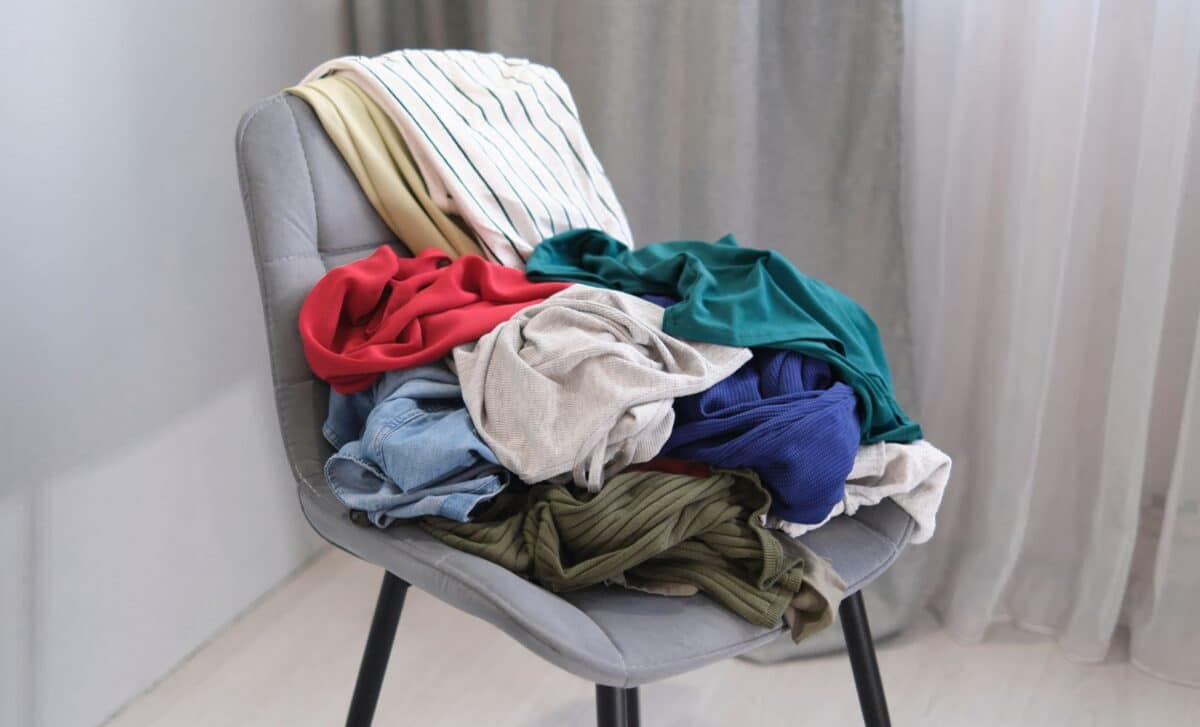
In a lot of bedrooms, there’s that one chair that basically turns into a clothing magnet. A shirt worn once, jeans that are “still good,” a sweater you’ll probably wear again… and suddenly, it’s all piled up there, halfway between the closet and the laundry basket.
And honestly, this little mess isn’t as random as it looks. It’s not always about being lazy or disorganized. Most of the time, it reflects how someone manages their space, their time, and their priorities. A small everyday habit that can say a lot more than people expect.
It’s Mental Energy Management
Leaving clothes on a chair is often less about being careless and more about saving effort. After a busy day, your mind naturally tries to reduce extra tasks, especially the ones that feel low priority. Folding and putting things away requires attention, time, and a tiny bit of motivation, and when you’re already tired, it’s easier to postpone it.
The chair becomes the perfect compromise: the clothes aren’t thrown on the floor, so it doesn’t feel like chaos, but they’re also not fully “dealt with.” It’s a quick, low-effort solution that keeps things visually contained without demanding any real energy.
You’re Not “Bad at Friendship”… What If Your Childhood Taught You To Stay Alone?
The Chair Becomes a “Transition Zone”
Psychologically, this is what makes the clothes chair so interesting: it acts like a buffer space between clean and dirty, order and disorder. These clothes are in a weird category, not clean enough to go back in the closet, but not dirty enough for the laundry.
So instead of forcing a decision, the chair becomes a temporary storage zone. It’s basically your brain saying: “I’m not choosing yet.” And that can feel surprisingly comforting, especially for people who have a lot going on.
This is why the clothes chair often appears during stressful periods. It’s not just clutter, it’s a small sign that the person is trying to manage life with the least possible friction.
A Higher Tolerance for “Controlled Mess”
Not everyone can live with a chair full of clothes. For some people, that kind of disorder feels distracting or irritating. But those who keep a clothes chair usually have a higher tolerance for visual mess, as long as it stays within boundaries.
In other words, it’s not that they don’t care. It’s that their brain doesn’t interpret it as urgent. The chair stays “organized enough” in their mind because the mess is contained and predictable. They know exactly what’s in the pile, even if it doesn’t look that way to anyone else.
It Can Reflect Flexibility and Personal Rules
A clothes chair can also signal a flexible lifestyle. People who keep one often adapt their routines based on mood, time, or energy levels, rather than following strict systems. They’re more likely to handle things when they feel ready instead of forcing perfection every day.
This kind of “controlled disorder” can actually be a form of control, not losing control. It’s the person choosing their own way of organizing their space, without being pressured by unrealistic standards of tidiness.
In that sense, the chair becomes a personal rule: “These clothes are still in rotation.” It’s not a mess. It’s a system.